_7.jpg )
COURTESY OF ARTHUR MORA

Arriba el Inframundo
Lucía Vidales
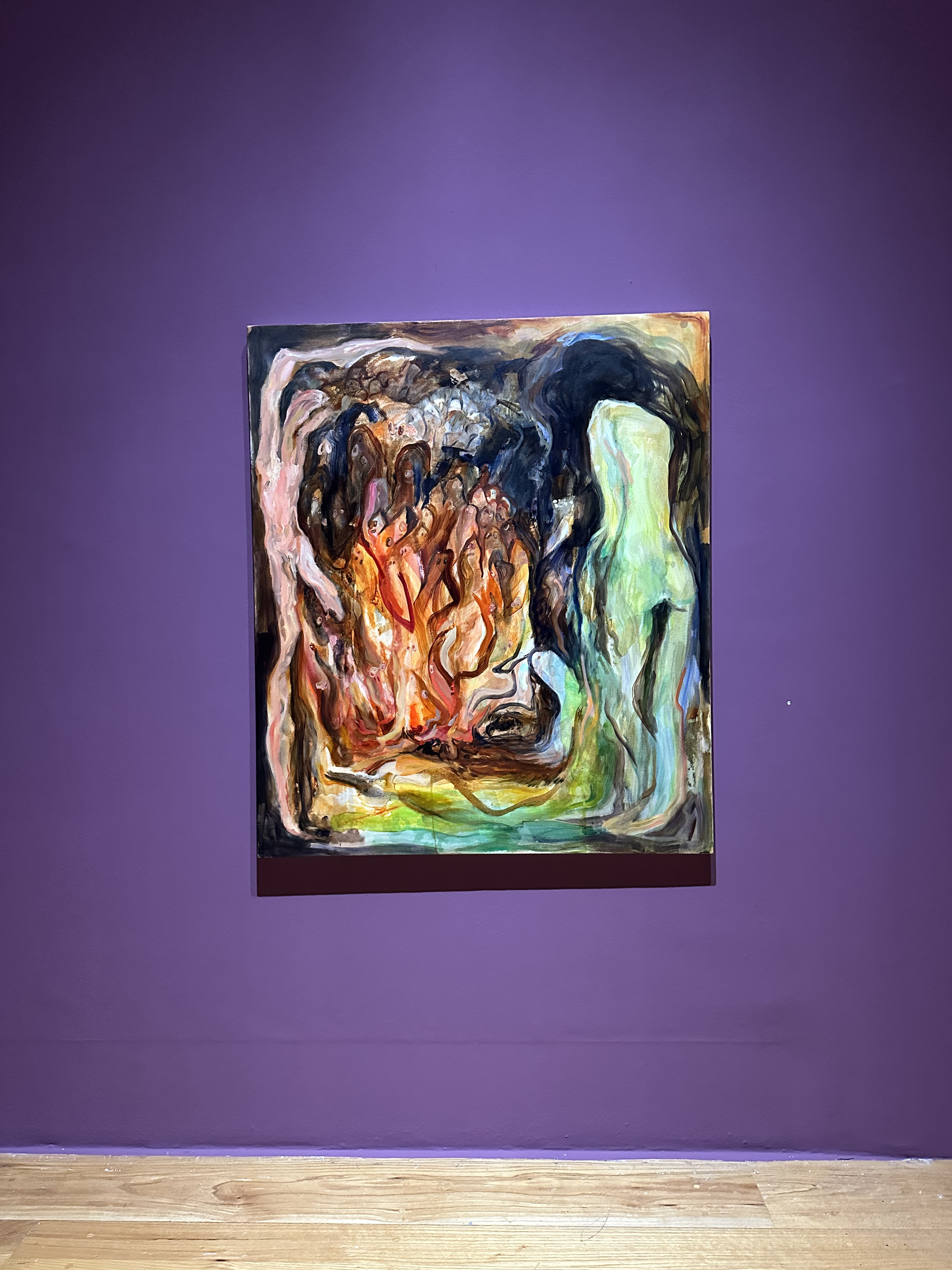
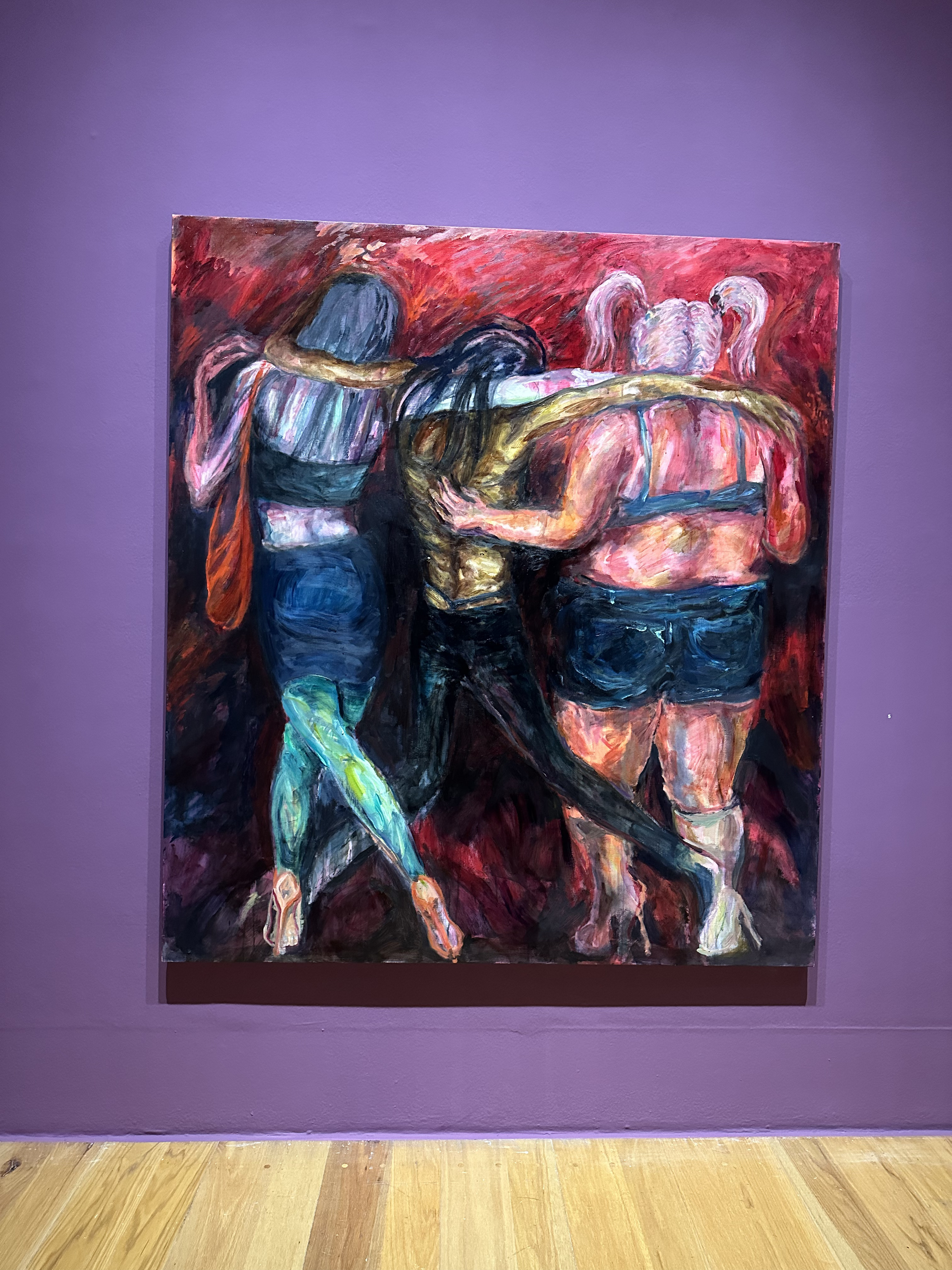
Lucía Vidales’s painting moves between the visible and the spectral, balancing historical density with a vivid sense of flesh and presence. Her work does not aim to represent bodies but to become them. Her figures exist as ongoing transformations, porous thresholds between the human, the animal, and the mineral. In her practice, the body becomes a living surface where time, violence, and desire blur together.
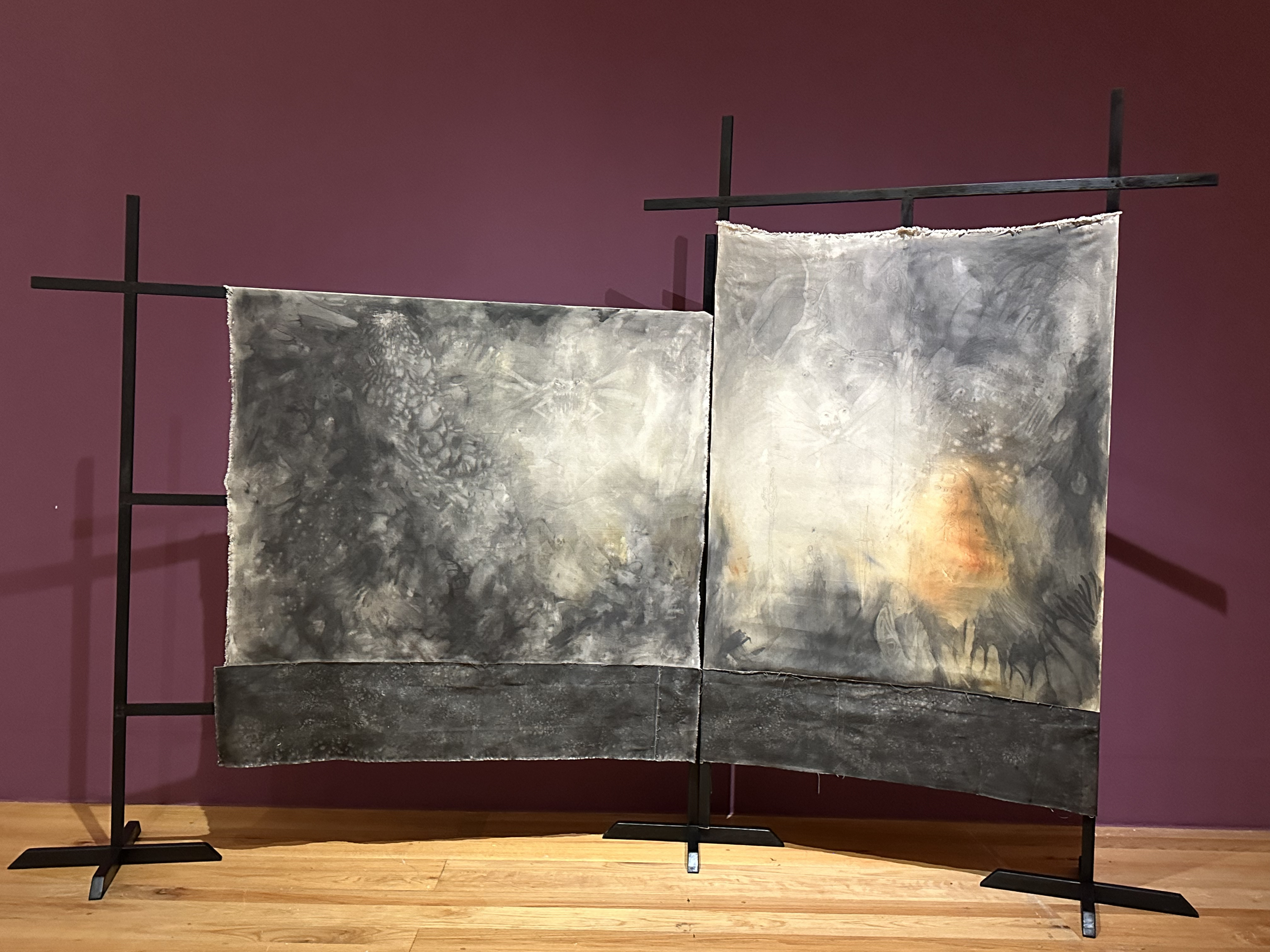
In the first gallery, two folding screens evoke the seasons of the year, accompanied by three large canvases inhabited by ambiguous creatures such as bats, moths and vultures, residents of the half-light and the underworld. Drawn from the landscape of Nuevo León, these figures embody what crawls or lurks at the margins: vermin understood as metaphors for the natural cycle of decay and vital passage.
In the second gallery, the artist turns to the history of painting in order to bend it from within. She revisits Le déjeuner sur l’herbe by Manet and presents a diptych on beginnings and endings, along with a scene of a witches’ sabbath. These bodies invoke the forces that give and take life. Here, and throughout Vidales’s work, painting becomes a field of metamorphosis where eroticism, death and regeneration coexist.
Arriba el Inframundo
Lucía Vidales
La pintura de Lucía Vidales se mueve entre lo visible y lo espectral, entre la densidad histórica y la carnalidad presente. La obra de Vidales no busca representar cuerpos sino devenirlos: sus figuras son procesos de transformación constante, fronteras porosas entre lo humano, lo animal y lo mineral. En su pintura, el cuerpo es una superficie viva donde el tiempo, la violencia y el deseo se confunden.
En la primera sala, dos biombos representan las estaciones del año, acompañados de tres grandes lienzos donde aparecen seres ambiguos -murciélagos, polillas, buitres—, habitantes del claroscuro y del inframundo. Estas figuras, tomadas del paisaje de Nuevo León, encarnan lo que se arrastra o acecha en los márgenes: alimañas como metáforas del ciclo natural de la descomposición y del tránsito vital.
En la segunda sala, la artista retoma la historia de la pintura para torcerla desde su interior. Versiona El desayuno sobre la hierba (Manet) y aborda un díptico sobre el inicio y el fin, junto con una escena de aquelarre: cuerpos que invocan las fuerzas que dan y quitan vida. La pintura, en esta sala y en la obra de Vidales en general, se vuelve un campo de metamorfosis donde el erotismo, la muerte y la regeneración coexisten.
COURTESY OF ARTHUR MORA
COURTESY OF MICHELLE LARTIGUE

COURTESY OF ARTHUR MORA