Courtesy of Ramiro Chaves

NOVEMBER 14, 2026 - JANUARY 16, 2027
Curated by Esteban King Álvarez
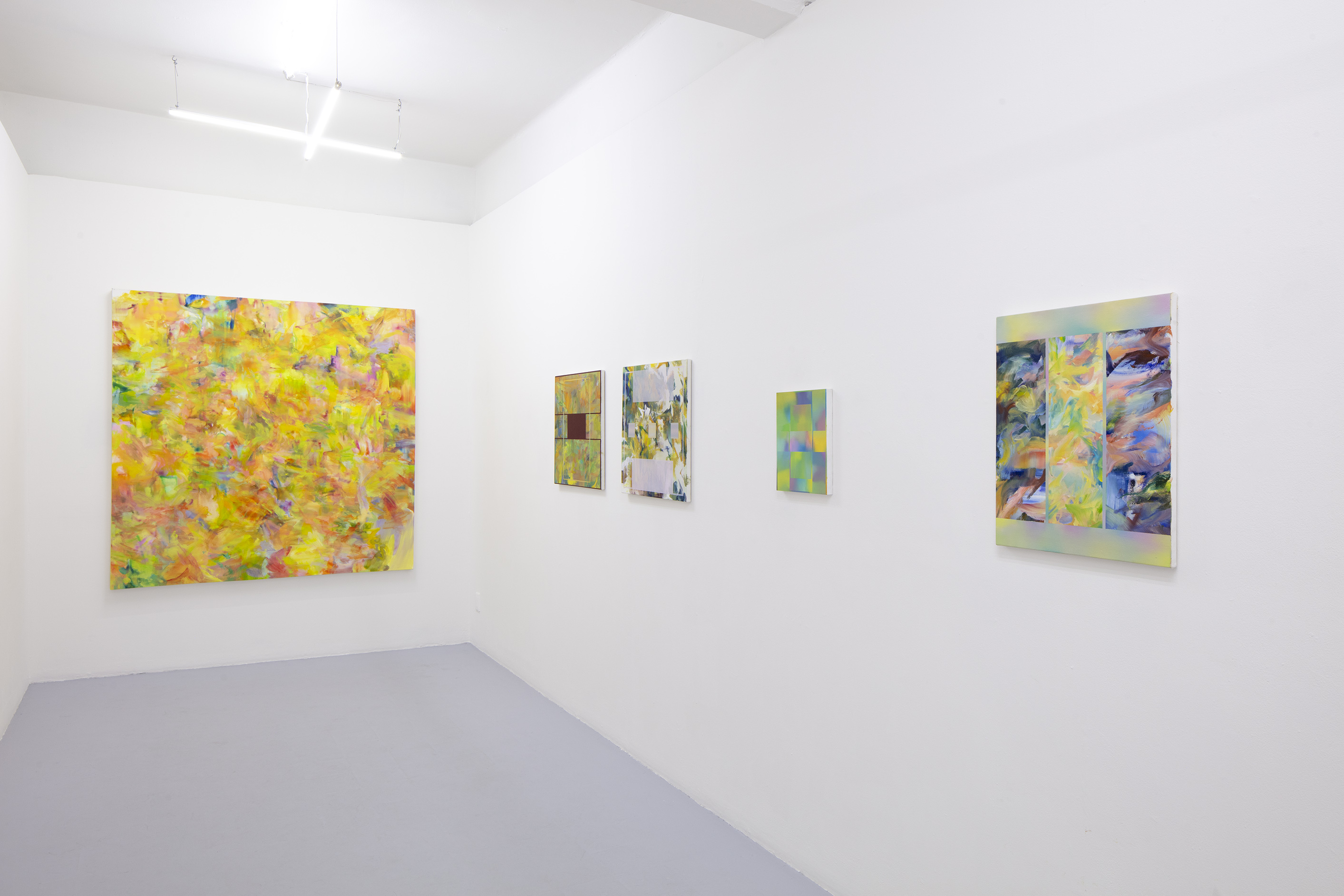
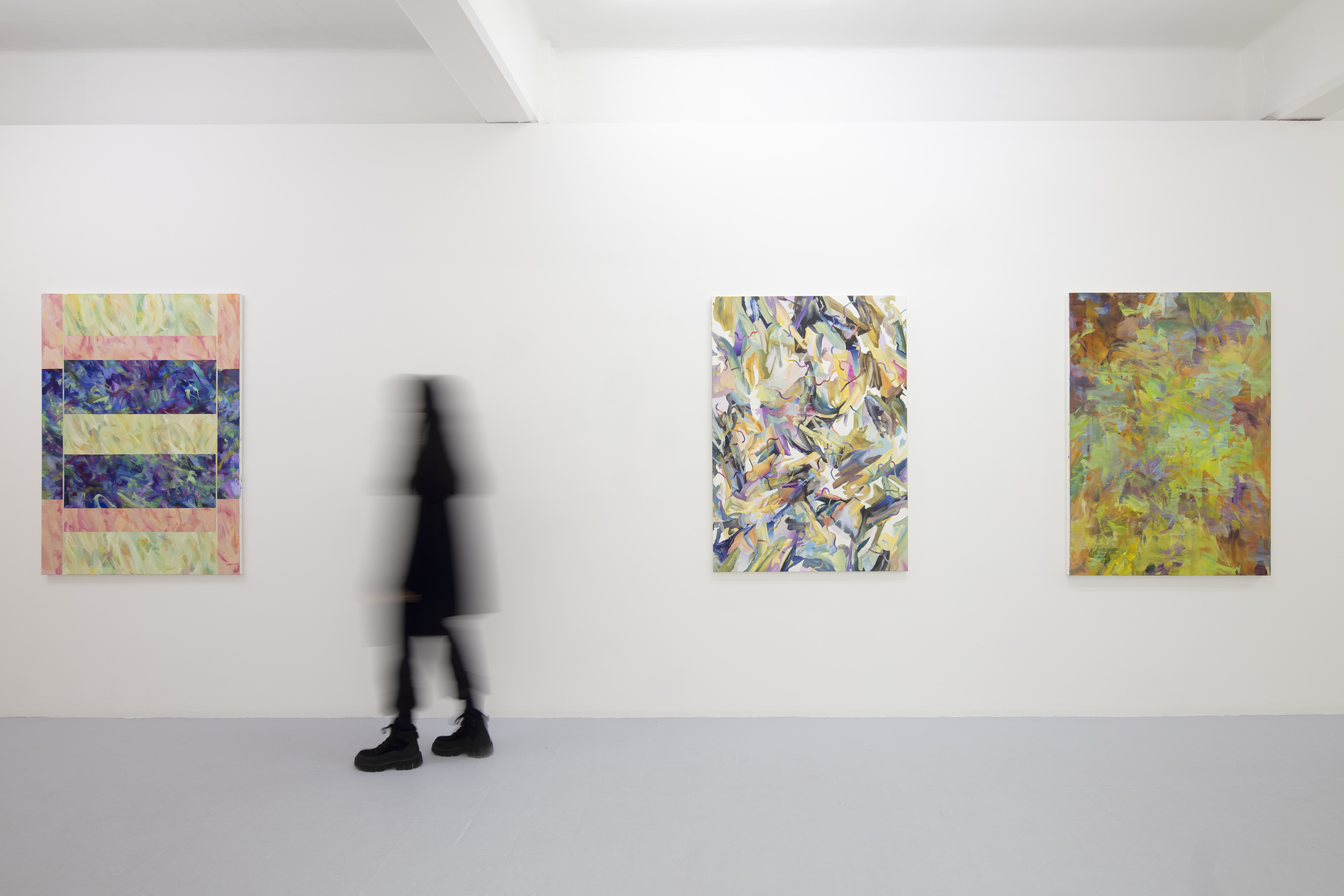
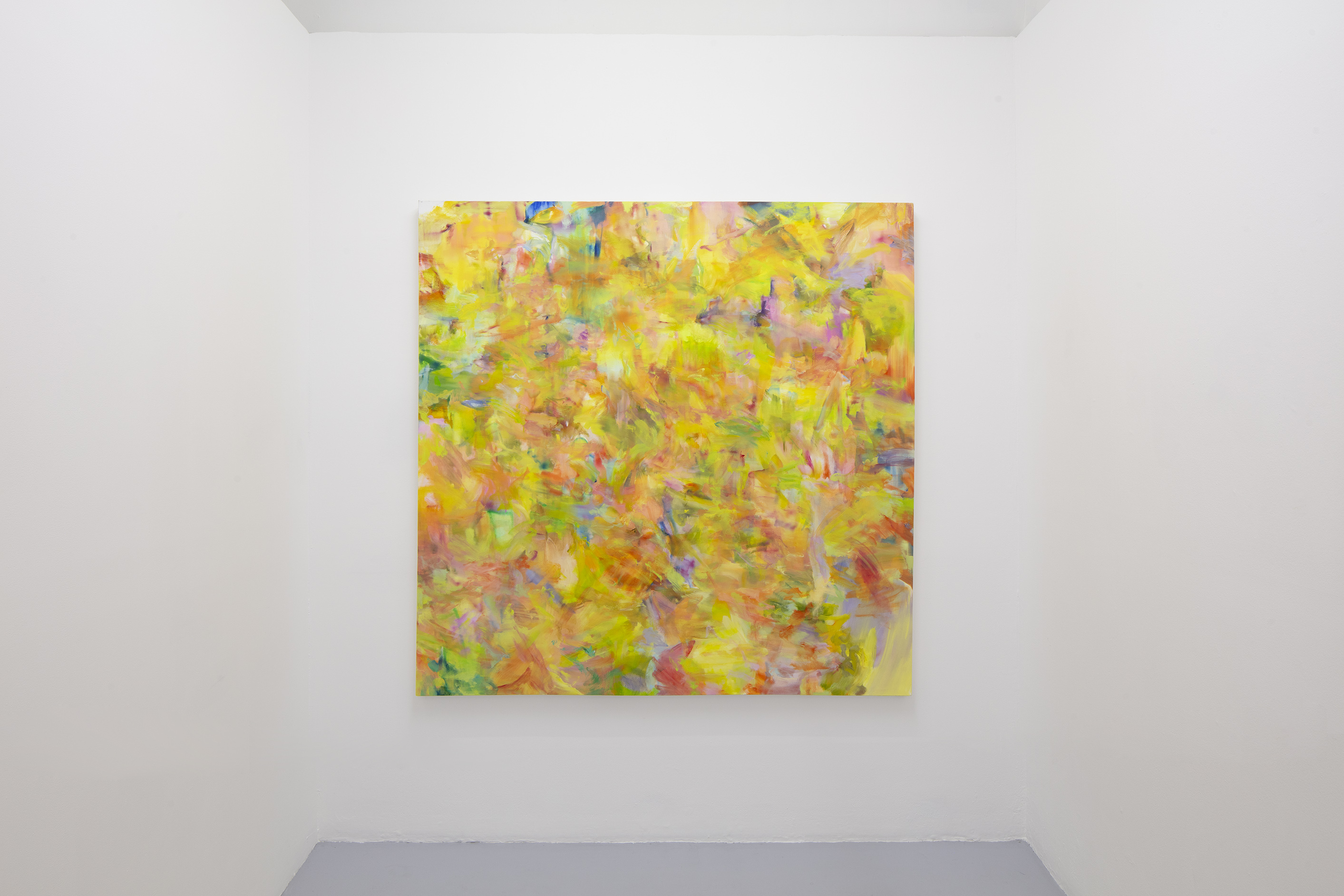
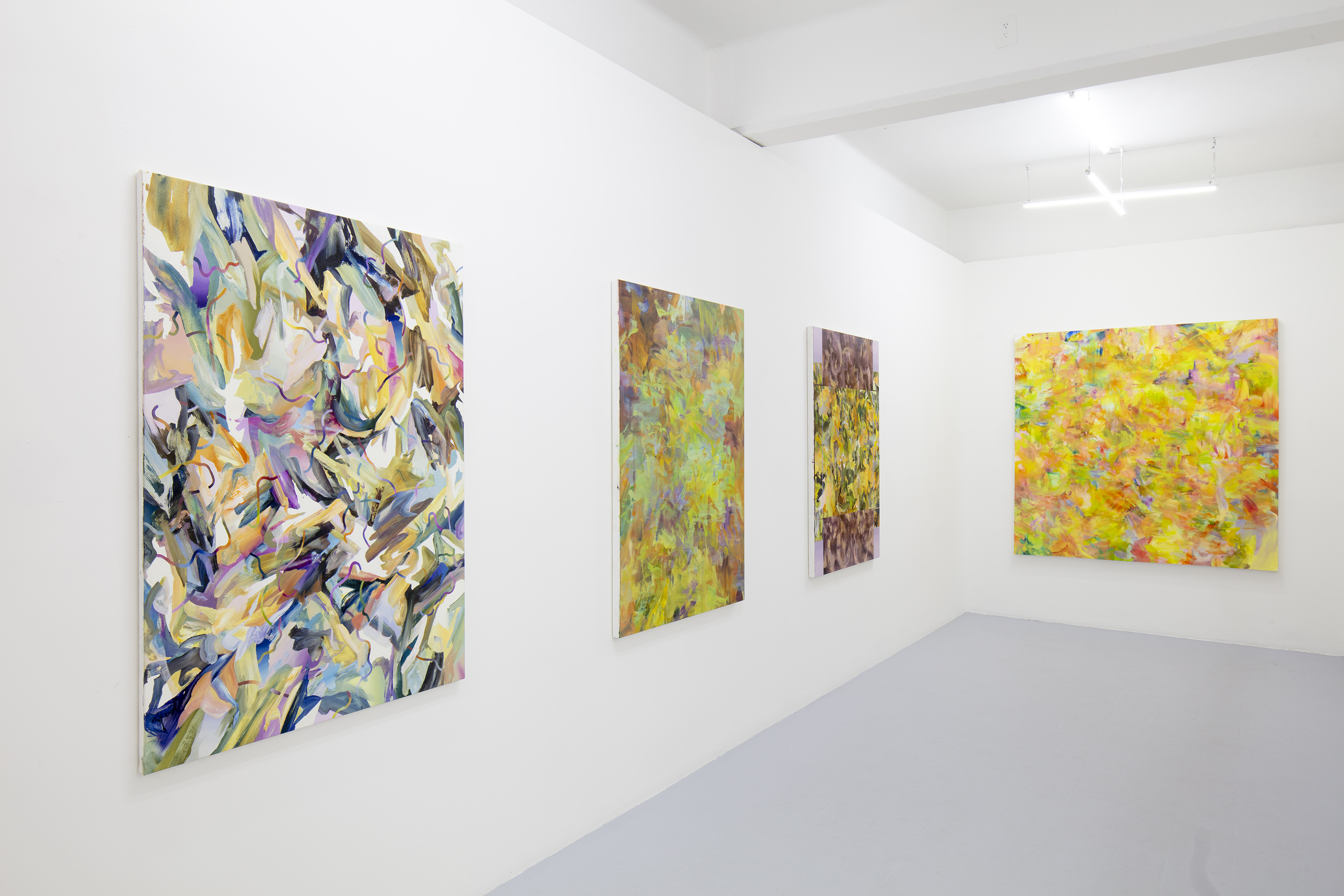
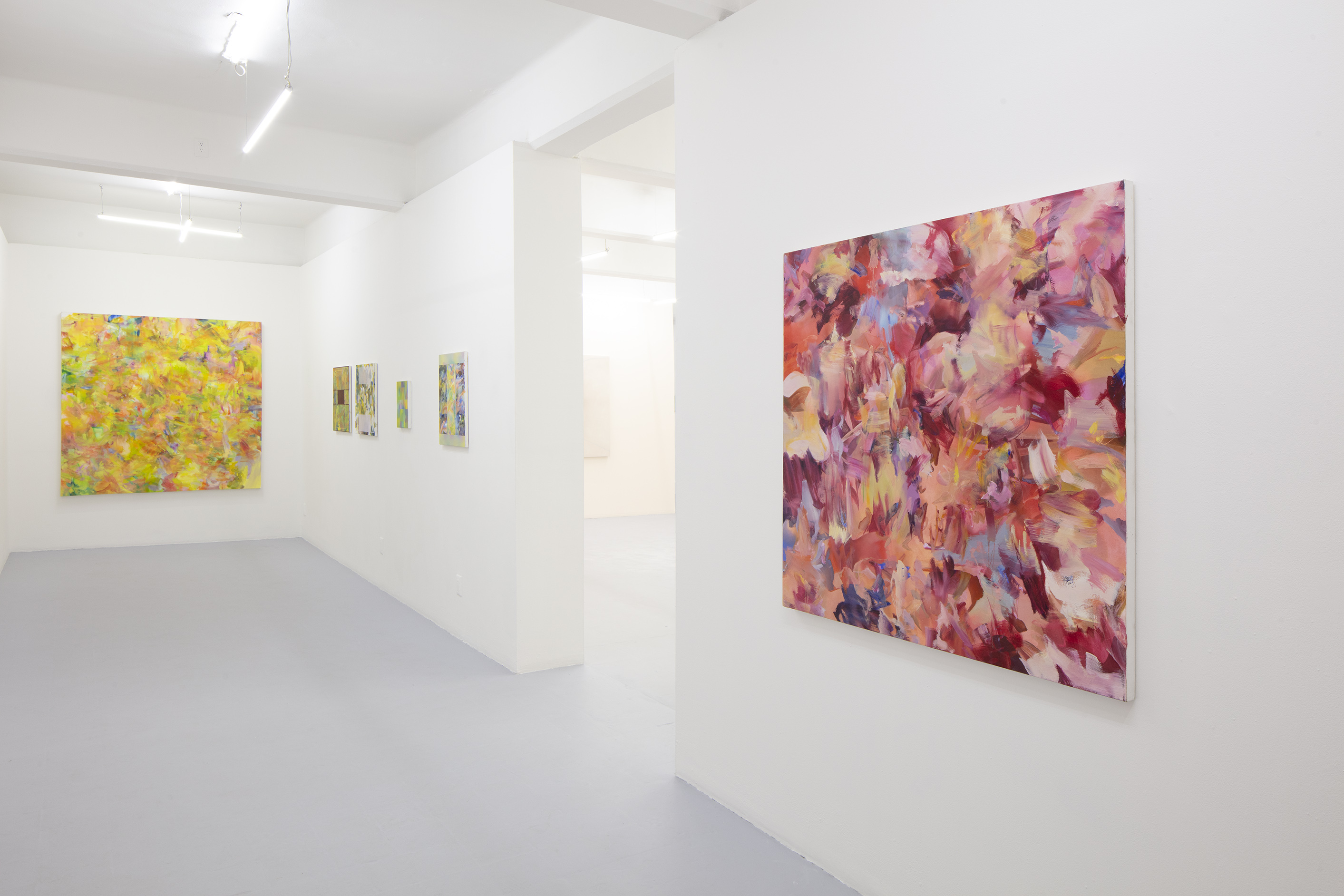
Eric Valencia’s recent work consists of a series of pieces that seek to slow down the act of looking. Against the current of fleeting consumption fostered by the widespread circulation of images and the disproportionate, incessant flow of visual stimuli, Valencia presents compositions that resist being grasped at a single glance. What takes place on these canvases? Where do figure and ground reside? Where does one end and the other begin? The genealogy of these questions is a long one, rooted in the interests of an artist who has continually questioned the very act of painting from an eminently self-reflexive perspective.
In this selection, Valencia sets out to explore the relationship between subjectivity and gesture, the mental and the material, thought and the body. At the same time, he seeks to make room for a complex perceptual experience through images that possess a hypnotic quality.
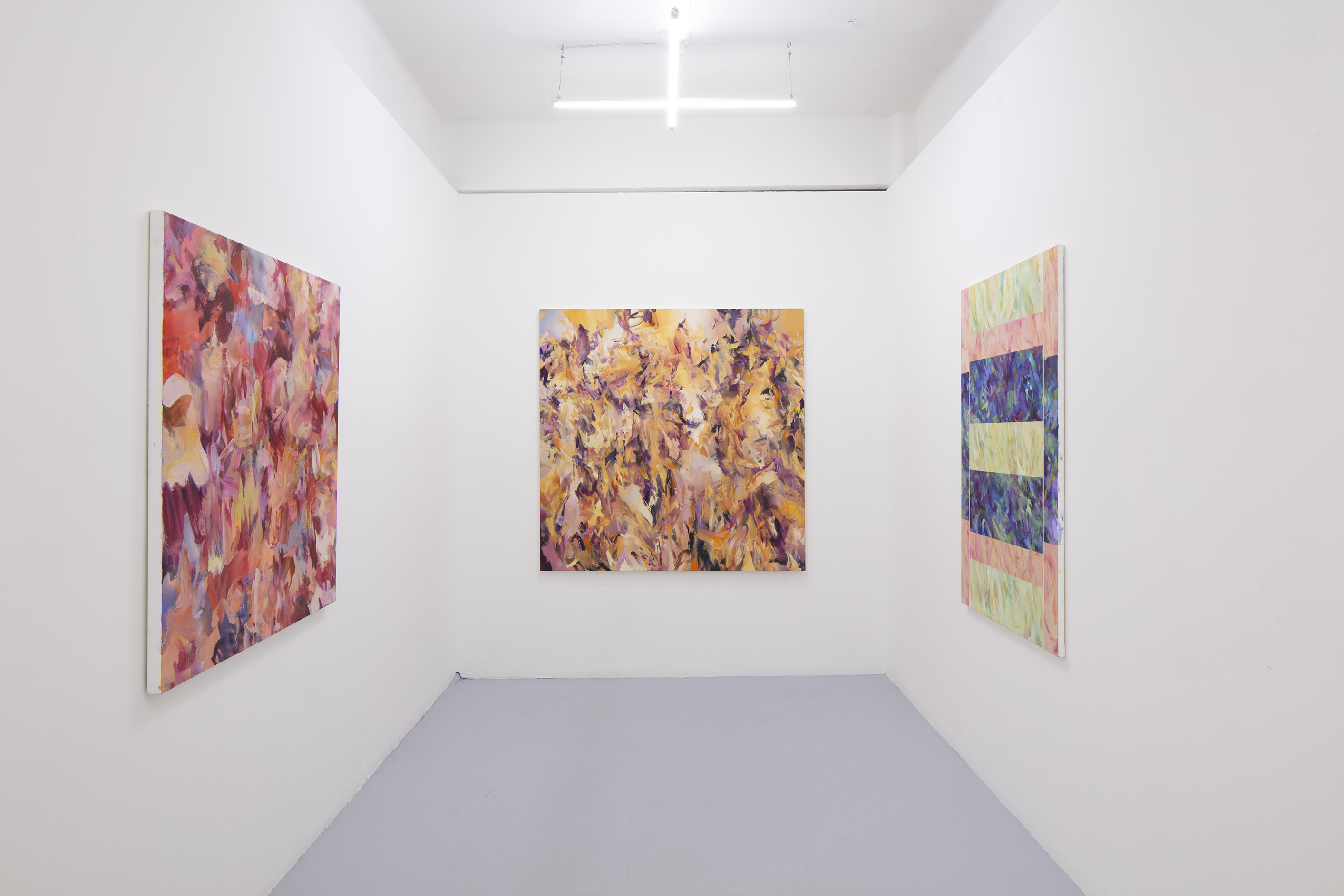
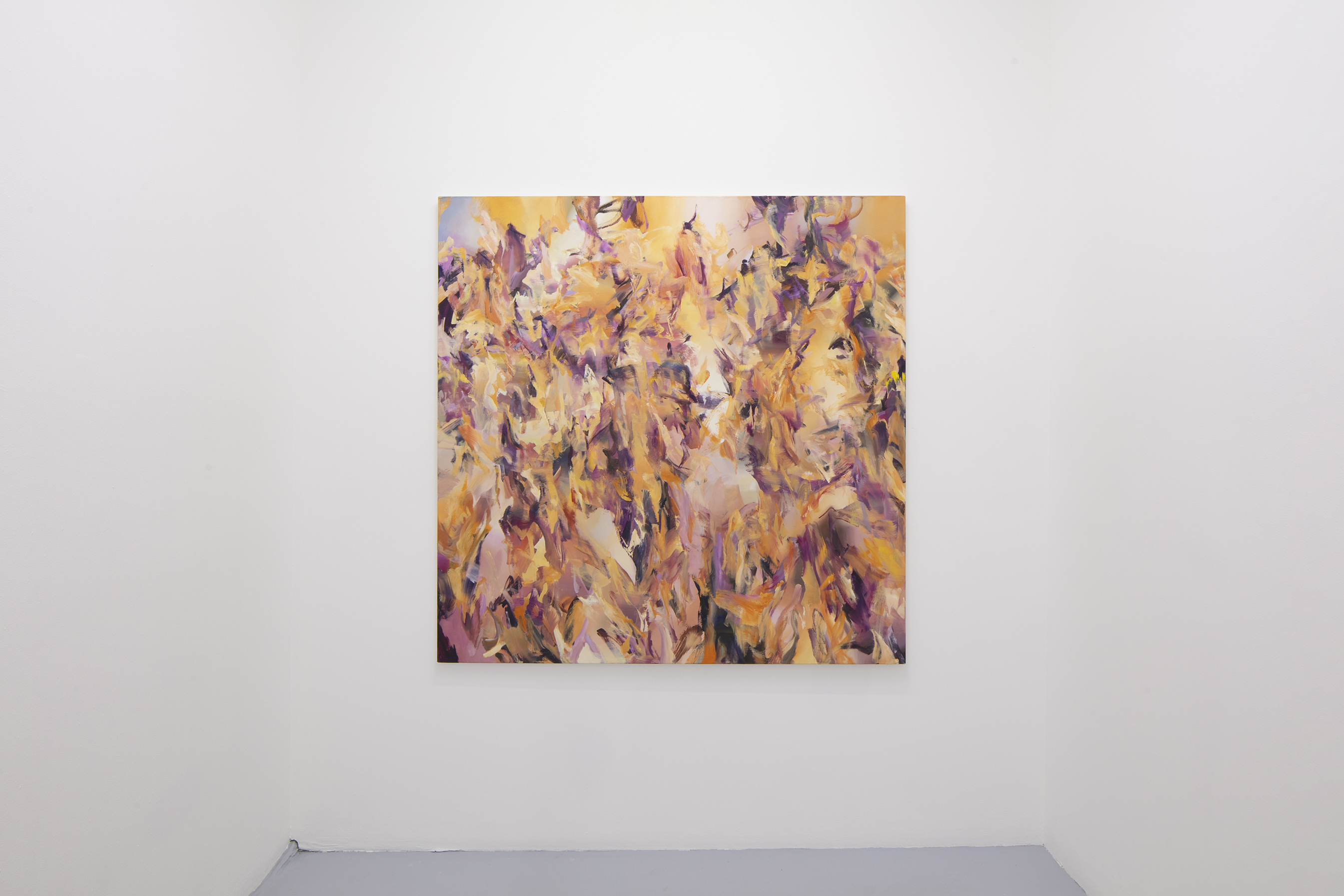
A key element in these works is their speed: slow and fast applications are interspersed in relation to the movements inherent to the composition. The exploration of color and the sensations they provoke are also part of this pictorial exploration. The use of complementary hues is continually set against chromatic aberrations, which seek to move beyond the purely visual realm and evoke synesthetic experiences. Indeed, the exhibition’s title alludes to the use of Pyrrole Orange—the number 73 in the Color Index International—in every single painting. And although it rarely appears in its pure form, it creates an underlying continuity that runs throughout the project.
This back-and-forth between figure and ground, chance and control, stillness and transience ultimately blurs the opposition between these terms. This is precisely what underlies the complexity of the works: visual questions that refuse to become clear signs for the eye and the mind. Perhaps the most compelling evidence of this baroque compositional device emerges when one attempts to recall any of the paintings in detail: How do they persist in memory? How are they summoned in thought once the gaze has shifted elsewhere?
The impossibility of this mnemonic act is not merely perceptual in nature: here, painting functions as a tool for dismantling thought. It is no secret that Valencia is a philosopher-painter, one who sets aside his brushes only to pick up a book or his notebook. The counterpart to these conceptual and phenomenological investigations finds its way, in a sense, onto the canvases. Nevertheless, it would be difficult to find a translator—not merely a precise one, but even an accurate one—for this process. His works resemble writings we attempt to decipher without knowing their meaning; hence, the gaze unfolds and loses itself in a kind of indecipherable forest of textures and brushstrokes.
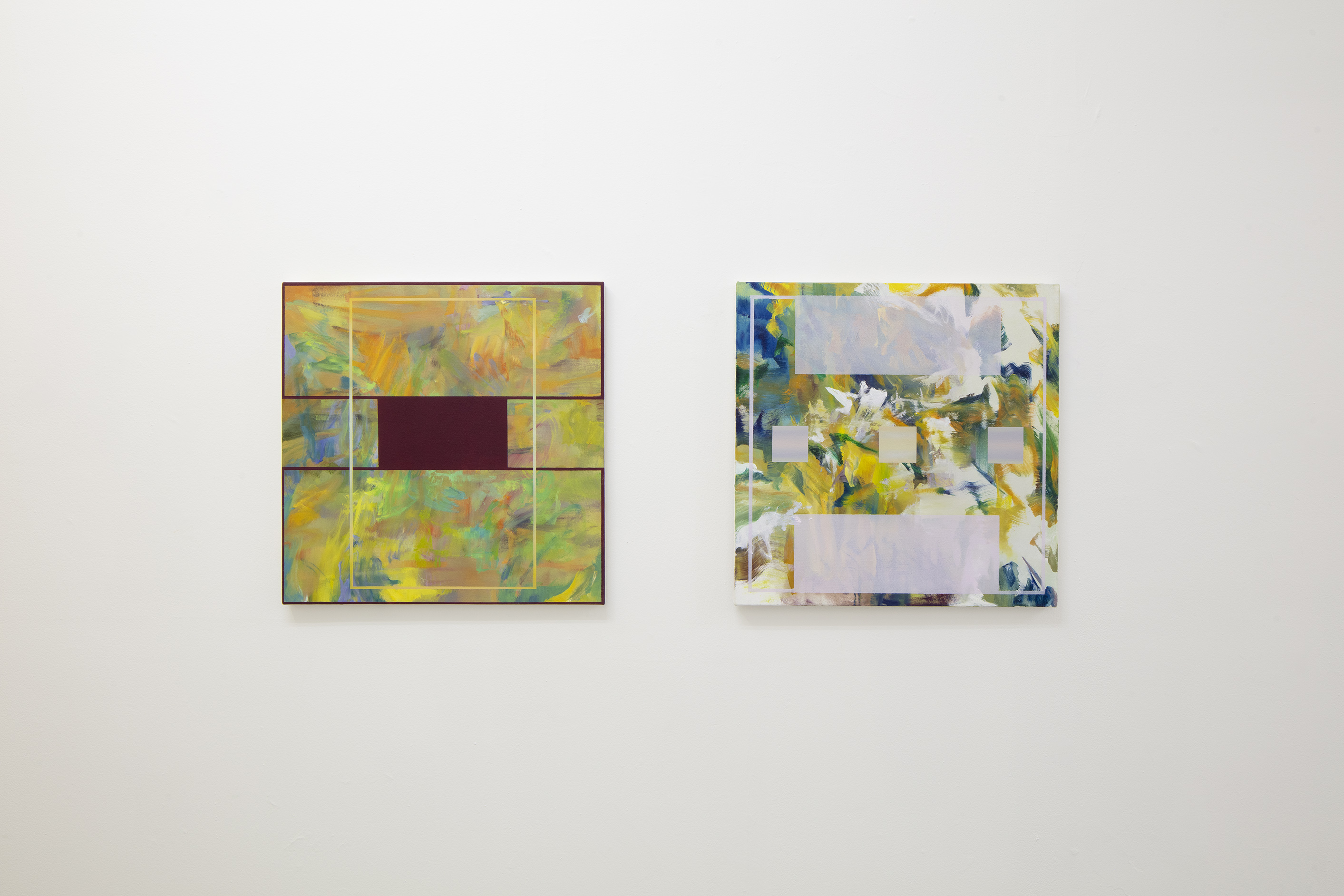
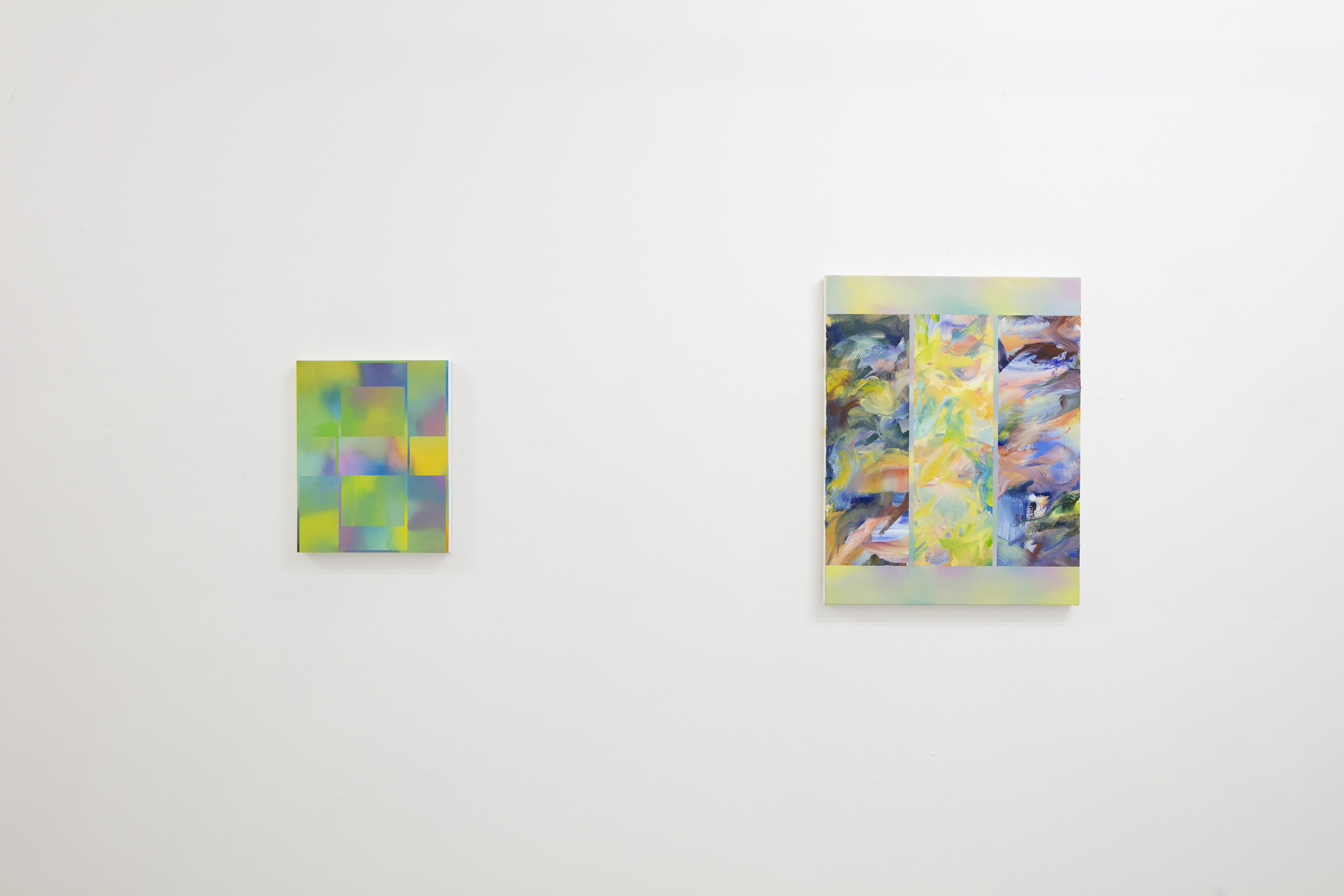
As if this were not enough, most of the pieces introduce another device: spatial segmentation through gridlike elements, whose geometric nature contrasts with the gestural quality characteristic of the works. This segmentation triggers an apparent visual order that nevertheless fragments the gaze and sets it in motion across the space.
These divisions ultimately evoke the paneling system found in certain philosophical comics—such as Chronosis, by Keith Tilford, Reza Negarestani, and Robin Mackay—immersed in speculative science fiction, through which Valencia ventures into the universe of paradoxes and spacetime travel. As in these graphic narratives, what matters here takes place in the interstices: in those impossible spaces between one fragment and another, where time folds, memory falters, and the gaze comes to a halt, if only for an instant.
Esteban King Álvarez
Curaduría por Esteban King Álvarez
La obra reciente de Eric Valencia consiste en una serie de piezas donde se busca ralentizar la mirada: a contracorriente del consumo fugaz propiciado por la circulación masiva de imágenes y el flujo desproporcionado e incesante de estímulos visuales, Valencia presenta composiciones difícilmente aprehensibles en un solo vistazo. ¿Qué es lo que acontece en estas telas? ¿Dónde están la forma y el fondo, dónde termina una y comienza la otra? La genealogía de estas preguntas es larga y obedece a los intereses de un artista que se ha preguntado continuamente por el acto mismo de pintar desde una perspectiva eminentemente autorreflexiva.
En esta selección, Valencia se propone explorar la relación de la subjetividad con el gesto, de lo mental con lo material, del pensamiento con el cuerpo. Al mismo tiempo, busca dar lugar a una experiencia perceptiv compleja, a partir de imágenes que poseen una cualidad hipnótica.
Un elemento clave en estas obras es su velocidad: aplicaciones lentas y rápidas son intercaladas, en relación con los movimientos propios de la composición. La exploración del color y las sensaciones que provocan también forman parte de esta investigación pictórica: el uso de tonalidades complementarias se contrapone a cada momento con aberraciones cromáticas, las cuales buscan rebasar el ámbito meramente visual y suscitar experiencias de carácter sinestésico. El título de la muestra, de hecho, evoca el uso del color Naranja Pyrrole —el número 73 del Color Index International— en absolutamente todos estos cuadros. Y aunque muy pocas veces aparece puro, produce una continuidad oculta que atraviesa el proyecto.
Este ir y venir entre forma y fondo, azar y control, sosiego y fugacidad termina por difuminar la oposición entre estos términos, y es precisamente lo que subyace a la complejidad de las obras: interrogantes visuales que rechazan convertirse en un signo claro para el ojo y la mente. Tal vez la prueba más contundente de este artilugio compositivo, de naturaleza barroca, se manifieste al intentar recordar a detalle alguno de los cuadros: ¿Cómo subsisten en la memoria? ¿Cómo son evocadas en el pensamiento una vez que se desvía la mirada?
La imposibilidad de este acto mnemónico no solo es de índole perceptiva: la pintura funciona aquí como una herramienta para desarticular el pensamiento. No es un secreto para nadie que Valencia es un pintor filósofo, que guarda los pinceles solamente para sacar un libro y su cuaderno de notas. El correlato de esas investigaciones conceptuales y fenomenológicas aparece traducido, de cierta manera, en el ámbito de las telas. No obstante, sería difícil encontrar un traductor no digamos ya preciso, sino siquiera certero, sobre este proceso: sus obras se asemejan a esas escrituras que intentamos descifrar pero cuyo significado desconocemos; de ahí que la mirada se despliegue y se pierda en una especie de bosque indescifrable de texturas y pinceladas.
Por si fuera poco, la mayor parte de las piezas introducen un artilugio más: la segmentación espacial por medio de elementos reticulares, cuya naturaleza geométrica contrasta con la gestualidad característica de las obras. Dicha segmentación detona un orden visual aparente que, sin embargo, fragmenta la mirada y activa su movimiento por el espacio.
Estas divisiones evocan, finalmente, el sistema de viñetas de ciertos cómics filosóficos —como Chronosis, de Keith Tilford, Reza Negarestani y Robin Mackay— inmersos en la ciencia ficción especulativa, a través de los cuales Valencia se adentra en el universo de las paradojas y los viajes espaciotemporales. Como en esas narrativas gráficas, lo decisivo, aquí, sucede en los intersticios: en esos lugares imposibles entre un fragmento y otro donde el tiempo se pliega, la memoria falla y la mirada, por un instante, se detiene.
Esteban King Álvarez
Courtesy of Ramiro Chaves
Courtesy of Ramiro Chaves
Courtesy of Ramiro Chaves
Courtesy of Ramiro Chaves
Courtesy of Ramiro Chaves
Courtesy of Ramiro Chaves
Courtesy of Ramiro Chaves
Courtesy of Ramiro Chaves
Courtesy of Ramiro Chaves