COURTESY OF RAMIRO CHAVES

APRIL 23 - MAY 23, 2026
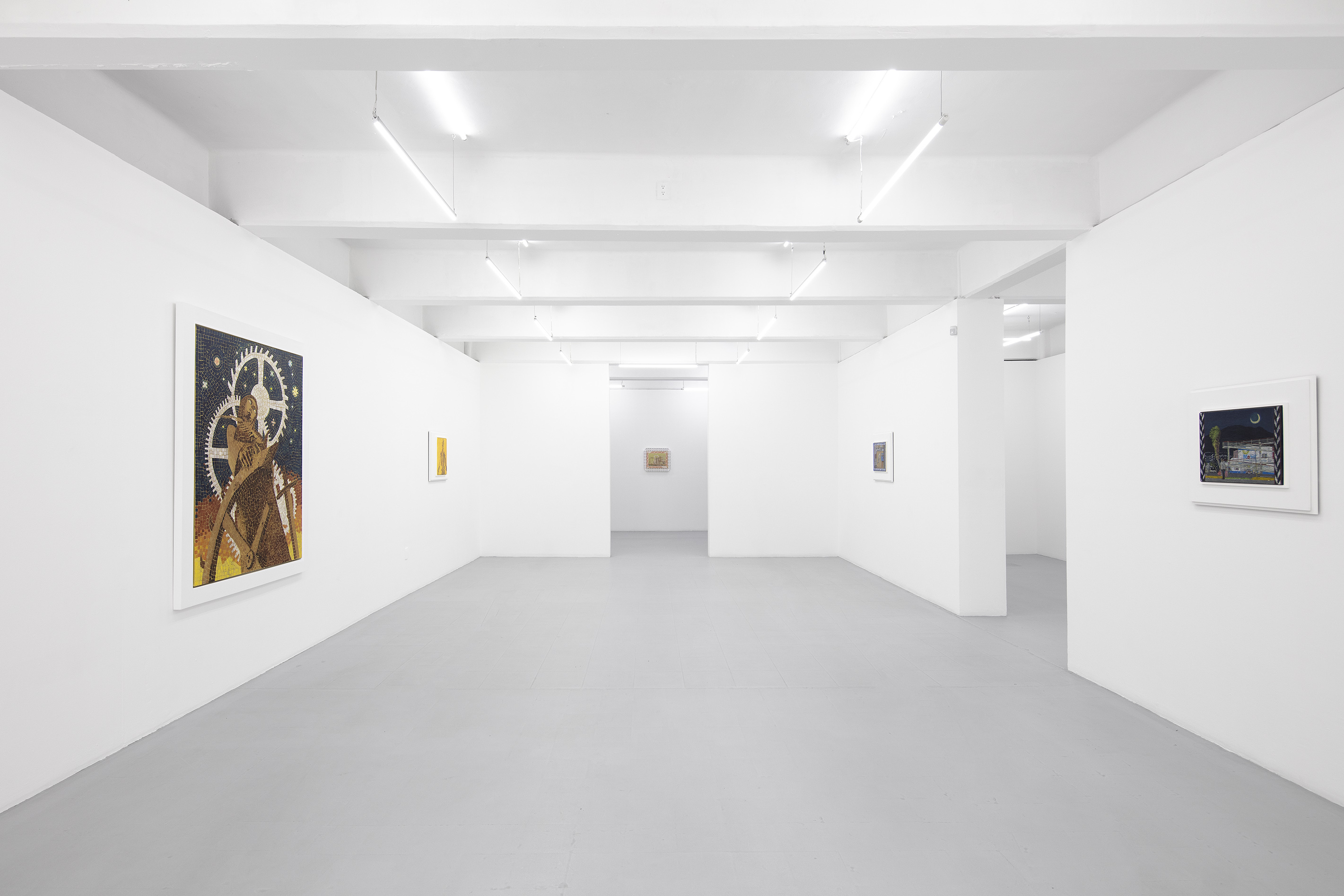
A crooked geometry of piled stones and exposure, suspended between chaos and cadence, rusted structures, futuristic Tsurus burning gas, and ancient deities emerging from the mountains tell us we have entered Santa. Look: more than a portrait of a city, this exhibition sets out a series of warnings that can only emerge from this specific place— intensities of the present that urgently demand interrogation, whose mystery collides with everything else: encounter, wandering, and omen.
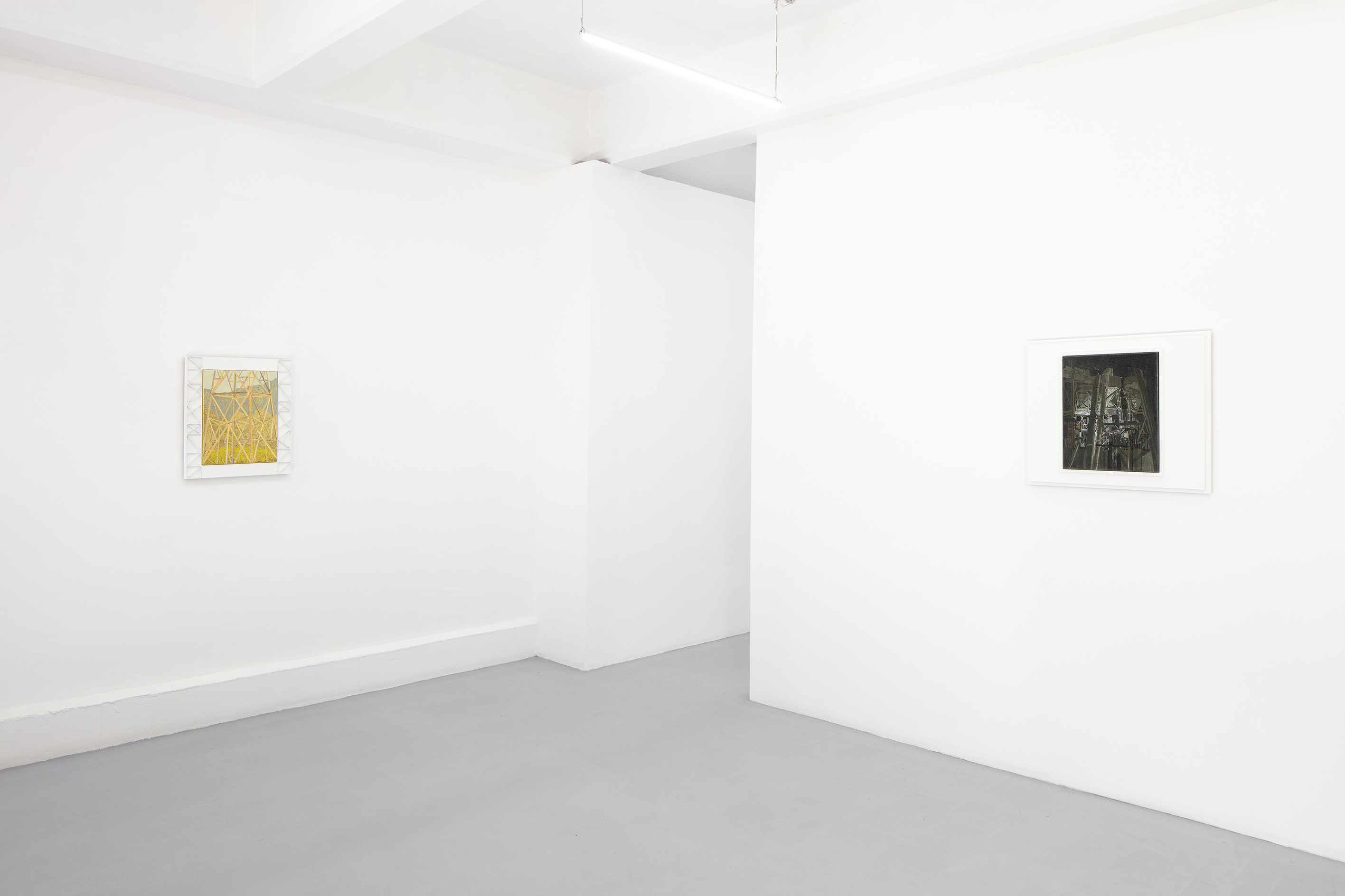
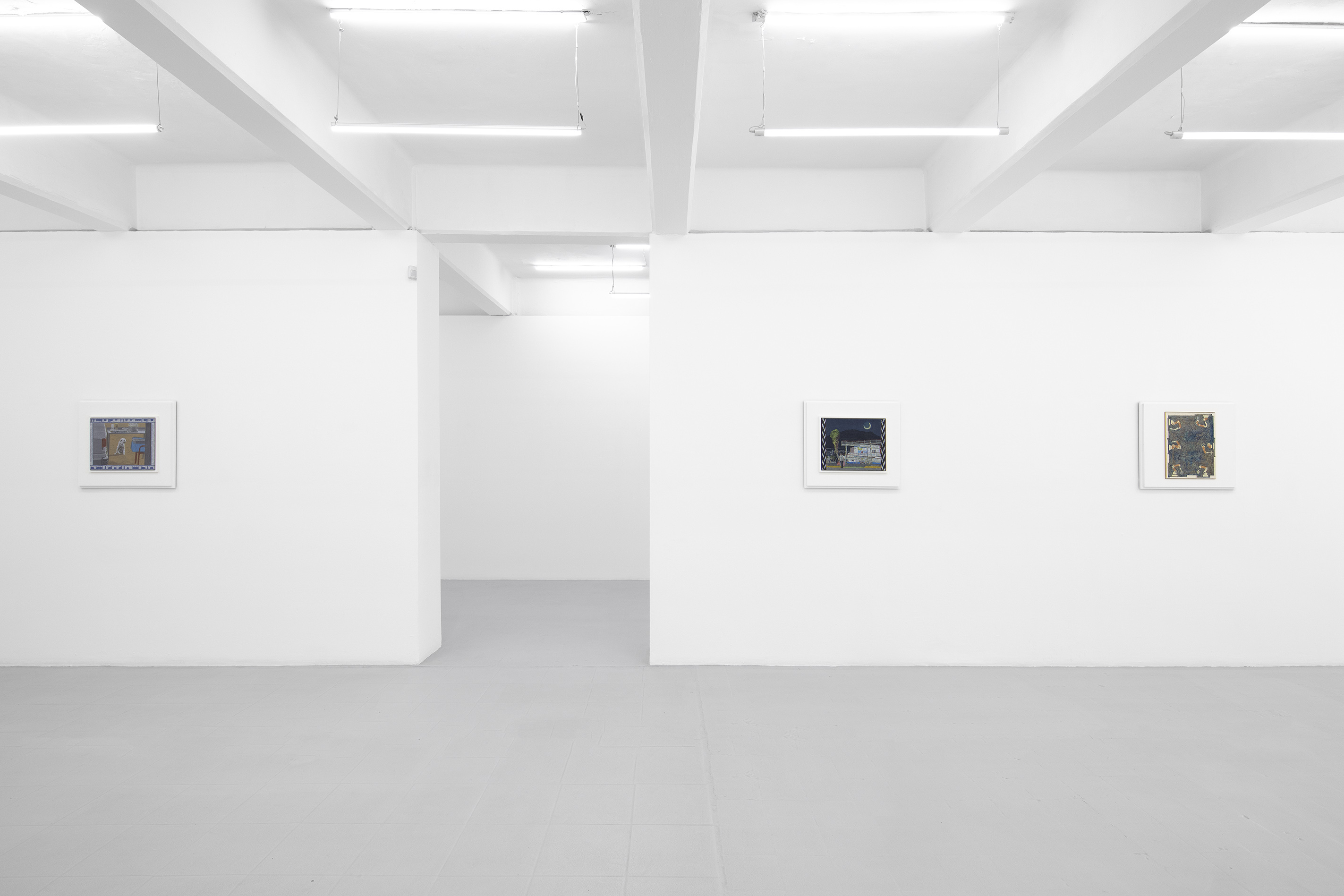
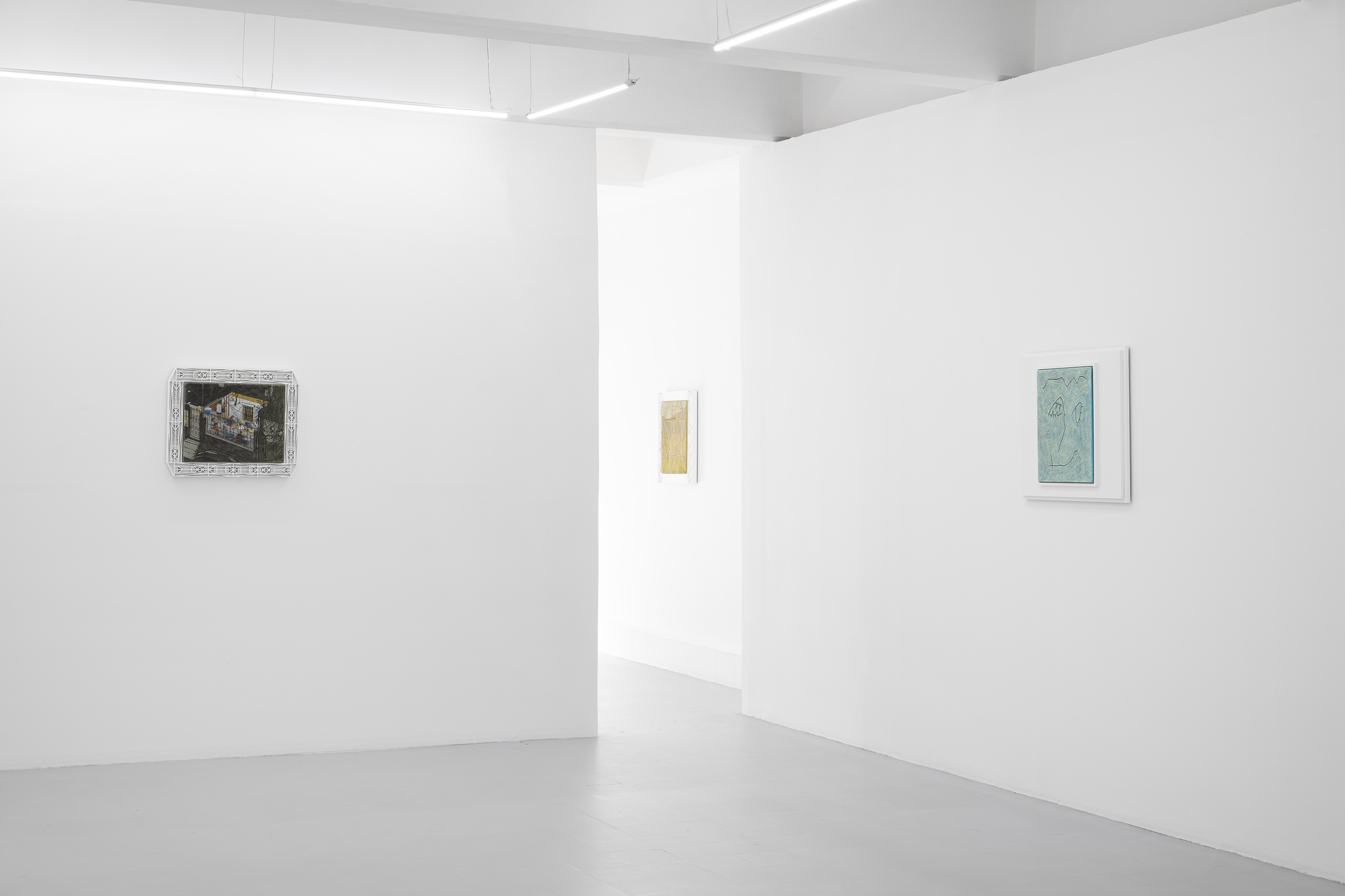
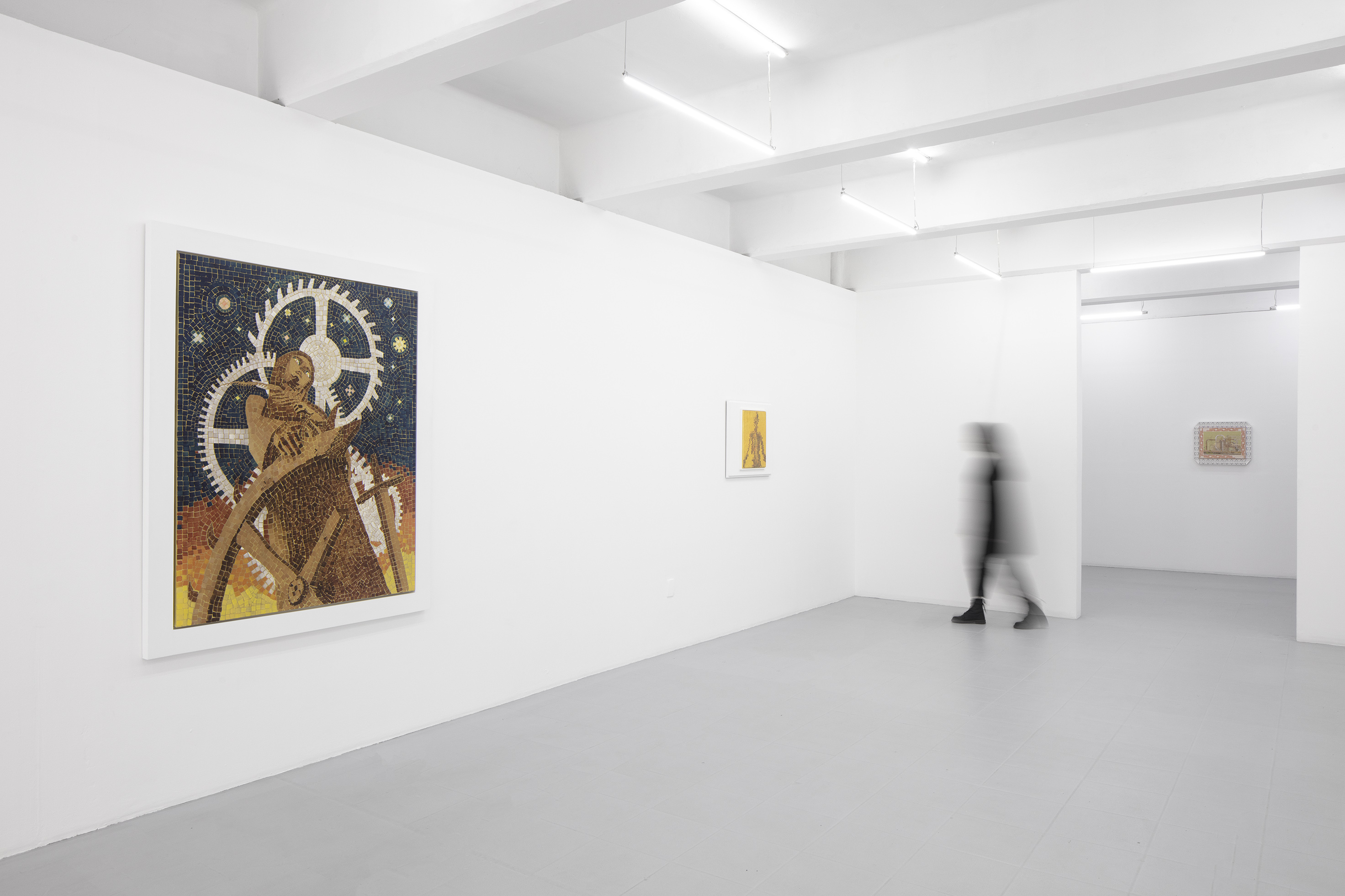
The brushstroke appears, mosaics appear, tesserae and more tesserae. We discover operations drawn from the mosaic tradition and pre-Hispanic lapidary practices, fused with an almost delirious obsession with liquid, dry, and viscous transparencies. A painting that isalso an insistent, fragmentary drawing. A painting that recalls fragments of many other things—omens and fantasy, everyday captures and fiction, a spiderweb in wrought iron. Issues of frontality and scale abound, of suspension and contrast. These are paintings composed of germinal units that make both the mineral and the slimy present. Theirgeometries are precisely modulated—the precision of someone, Christian Camacho, who tap-dances to the rhythm of a beat, never losing time, each painting a new set of steps.Heterogeneous layers overlap and interact in color, like rhythm with melody animating the lines; disaggregated sets become more than the sum of their parts.
Before living in Santa, the industrial felt distant to me; now it is the most material andconcrete—inseparable from the indestructible street dog-of-rags, the woman at the taco stand, robots operating in the darkness of vast warehouses, toxicity in the wind with its governmental negligence, parking lots, sheets of metal burning. Santa Catarina turned Christian and me into semi post-apocalyptic cockroaches, mountainous and suburban, surviving again and again multiple beginnings and ends of worlds—though perhaps we already were, especially him, who grew up in the suburbs of the State of Mexico.
Santa lies in a region of Nuevo León where the wind echoes; it is land of pure rayadero, badly behaved, poorly mapped, resistant to the aspirations of a whitened city. Scored with prehistoric mark-making as well as aerosol hooks—those socio-spatial markers characteristic of the northeast—graffitied in black, which, as in much ancient drawing, is the color that resists time and solar voracity. Here, each day, the northern sun and shadow become trapped in hallucinatory duels of drawing across the mountains, across thelandscape, high temperatures, low temperatures.
Light fractures the range into units of infinite resolution, interrupted here and there by detail: wiring, the bites of mining, industrial metalwork, and sudden flights of vermin. These paintings by Camacho operate on the surface of the canvas through an illusion that does not deceive reality but instead reveals something of painting itself—a materiality different from that of mosaic, perhaps simpler and more common, like electrons orbiting an atom. Modulations of light over the white of transitional frames demarcate, lock in, and protrude, only to dissolve or repeat forms, generating rhythms and reverberations among painted elements. Some paintings are composed of moving fragments of the everyday, charged with a kind of common, street-level heroism that I don’t quite know how to name —clusters of affective intensity whose register is not only visual. Some are icon-like units, and others are structures—non-logical, harmonic formations of the possible destabilizing itself, simultaneity of sets and intensive variations like incantations: Mountain scratch face bitten / fossil robot oxidized futurism / wrought-iron branch with family in black delirium / under dust / grey green / tinkling of stars and artifice.
Lucía Vidales
Santa Catarina, Nuevo León, spring 2026
Una geometría chueca, de amontonamientos de piedras e intemperie entre caos y cadencia, estructuras oxidadas, Tsurus futuristas quemando gas y deidades antiguas que emergen de las montañas nos dicen que entramos a Santa. Mira, más que el retrato de una ciudad, esta exposición dispone una serie de advertencias que son posibles sólo desde el lugar específico,b intensidades del presente a las que resulta apremiante interrogar, y cuyo misterio colisiona el resto, con el encuentro, la vagancia y el presagio.
Aparece la pincelada, a-parecen mosaicos, teselas y más teselas. Descubrimos operaciones de la tradición musiva y la lapidaria prehispánica, fusionadas con una obsesión casi delirante de transparencias líquidas, secas y viscosas. Una pintura que también es un dibujo insistente y fragmentario. Una pintura que recuerda a cachitos de muchas otras cosas, de augurios y de fantasía, capturas cotidianas y de la ficción, una tela de araña en la herrería. Abundan problemas de la frontalidad y las escalas, de la suspensión y del contraste. Son pinturas conformadas por unidades germinales que hacen presente a lo mineral y a lo baboso. Sus geometrías fueron moduladas con precisión, la de alguien -Christian Camacho- que zapatea siguiendo el compás de un baile, sin perder el ritmo, en cada pintura nuevos pasos. Capas heterogéneas se superponen e interactúan en su color, como el ritmo con la melodía que anima las líneas, los conjuntos desagregándose y son más que la suma de sus partes.
Antes de vivir en Santa, lo industrial era para mí una distancia, ahora es lo más material y concreto, inseparable del invencible callejero perro-estopa, de la señora del puesto de tacos, los robots operando en la oscuridad de grandes naves, la toxicidad al viento con su negligencia gubernamental, estacionamientos, láminas ardiendo. Santa Catrina nos volvió a Christian y a mí unas cucarachas medio postapocalíptícas, serranas y suburbanas, sobreviviendo, una y otra vez, a múltíples inicios y fines de mundos, aunque quizá ya lo éramos, sobre todo él que creció en los suburbios del Estado de México. Santa está en una zona de Nuevo León donde retumba el viento, es tierra de puro rayadero, mal portada, mal mapeada, dura para el aspiracionismo de ciudad blanqueada. Rayada con grafismos prehistoricos, así como por ganchos de aerosol, esos marcadores socio-espaciales- característicos del noreste, graffiteados en negro que, como en mucho del dibujo antiguo, es el color que resiste al tiempo y a la voracidad solar. Aquí cada día el Sol del norte y la sombra se entrampan en alucinantes duelos del dibujo sobre las montañas, sobre el paisaje, temperaturas altas, temperaturas bajas. La luz fragmenta la serranía en unidades de infinita resolución, interrumpidas aquí y allá por el detalle: el cablerío, las
mordidas que arremete la minería, los fierros fabriles y los súbitos vuelos de alimañas.
Estas pinturas de Camacho operan en la superficie del lienzo, mediante una ilusión que no engaña sobre la realidad, sino revela algo de la pintura, una materialidad distinta a la del mosaico, quizá más simple y más común, como la de electrones girando en un átomo. Las modulaciones de la luz sobre el blanco de los marcos-transiciones, demarcan, encajan y sobresalen para disolverse o repetir formas creando ritmos
y reverberaciones de los elementos pintados. Algunas pinturas están conformadas por elementos con movedores de lo cotidiano, cargadas de una especie de heroísmo común y callejero que no sé cómo nombrar, amasijos de intensidad afectiva cuyo registro no es solo visual. Algunas son unidades como íconos, y otras son estructuras, no lógicas, armónicas de lo posible desequilibrándose, simultaneidad de conjuntos de variaciones intensivas como conjuros: Montaña rayón cara mordida / fósil robot óxido futurista/ herrería ramal con familia en negro alucín / bajo el polvo / gris verde/ tintinar de estrellas y artificio.
Lucía Vidales
Santa Catarina, Nvo. León, primavera del 2026
COURTESY OF RAMIRO CHAVES
COURTESY OF RAMIRO CHAVES

COURTESY OF RAMIRO CHAVES
COURTESY OF RAMIRO CHAVES
COURTESY OF RAMIRO CHAVES
COURTESY OF RAMIRO CHAVES
%20(1).jpg )
Santa nocturna, 2026
Oil on canvas
48.7 x 58.7 cm (with frame) | 35 x 45 cm
.jpg )
Cambio de luces en las estructuras, 2026
Oil on canvas
50 x 58 cm (with frame) | 45 x 35 cm
.jpg )
Clima interior (autonomous/unlit), 2026
Oil on canvas
60 x 68 cm (with frame) | 45 x 35 cm