COURTESY OF RAMIRO CHAVES

SEPTEMBER 3 - OCTOBER 24, 2026
¡Vé a sentir!
By Susana Vargas Cervantes
I- Before seeing the show
Am I open?
Have I ever felt another’s presence?
What did I connect to the last time I lit a candle? What do candles and light connect me to?
Which woman’s self-portrait in art history is calling me now?
How many animals in paintings have guided my experience? What do animals in paintings open up for me?
Am I open?
Am I open to receiving?
Am I open to receiving information?
Am I open to receiving information I don’t know?
Am I open to receiving information without knowing where it came from?
Am I open to not knowing?
________________________________________________________________________________________________
Following the artist’s instructions, we offer a series of questions that can help us open up to experiencing Granara’s paintings, with the hope of moving away from rationalizing our experience of seeing through text. Please read them before seeing the show. This motivation came to me the first time I saw the paintings in Granara’s studio. “I have felt that” and “I know how it feels to have the crown of my head feel opened up to the sky” were some of my first reactions. We wish that you can open up too.
II- The paintings
¡Vé a pintar! is an invitation, although it takes the form of an imperative. It is a phrase that could be a command, but in Cecilia Granara's work it becomes something closer to a mantra: go paint, return to yourself, connect to another dimension.
Painting becomes a way of connecting to what cannot be touched. And what cannot be touched can hardly be put into language either. It can only be felt. And perhaps this is where the work begins, precisely at the place where language can’t materialize what we feel. The small painting that gives the exhibition its title is, in relation to the other works, almost
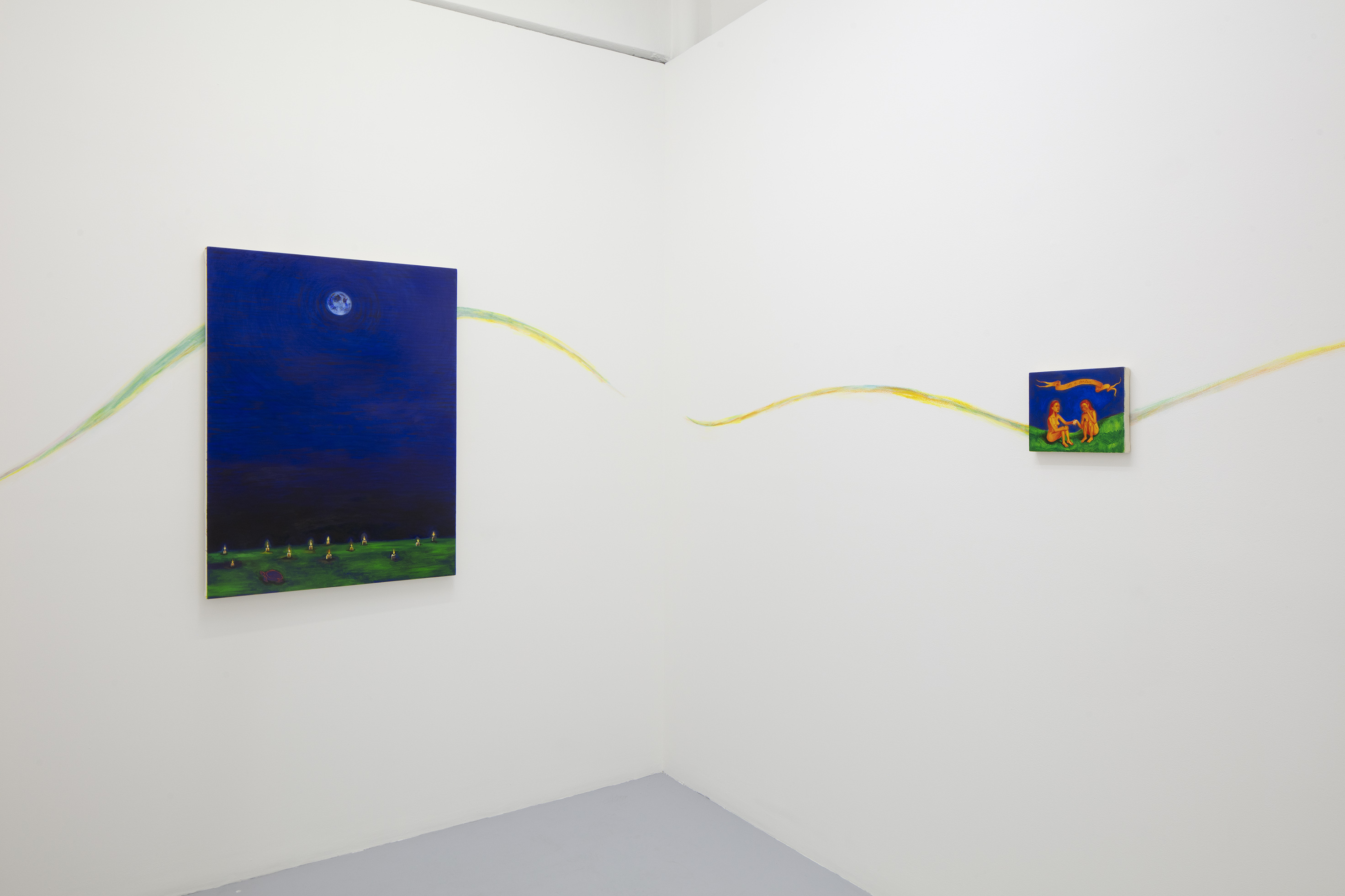
intimate. Between Persian blue and Eden green, one figure, with her mouth slightly open, gives the breath of life to another figure, or perhaps toward another self, or maybe her own spirit, reminding her that painting is a form of connection, and setting in motion an animist world that extends throughout the exhibition.
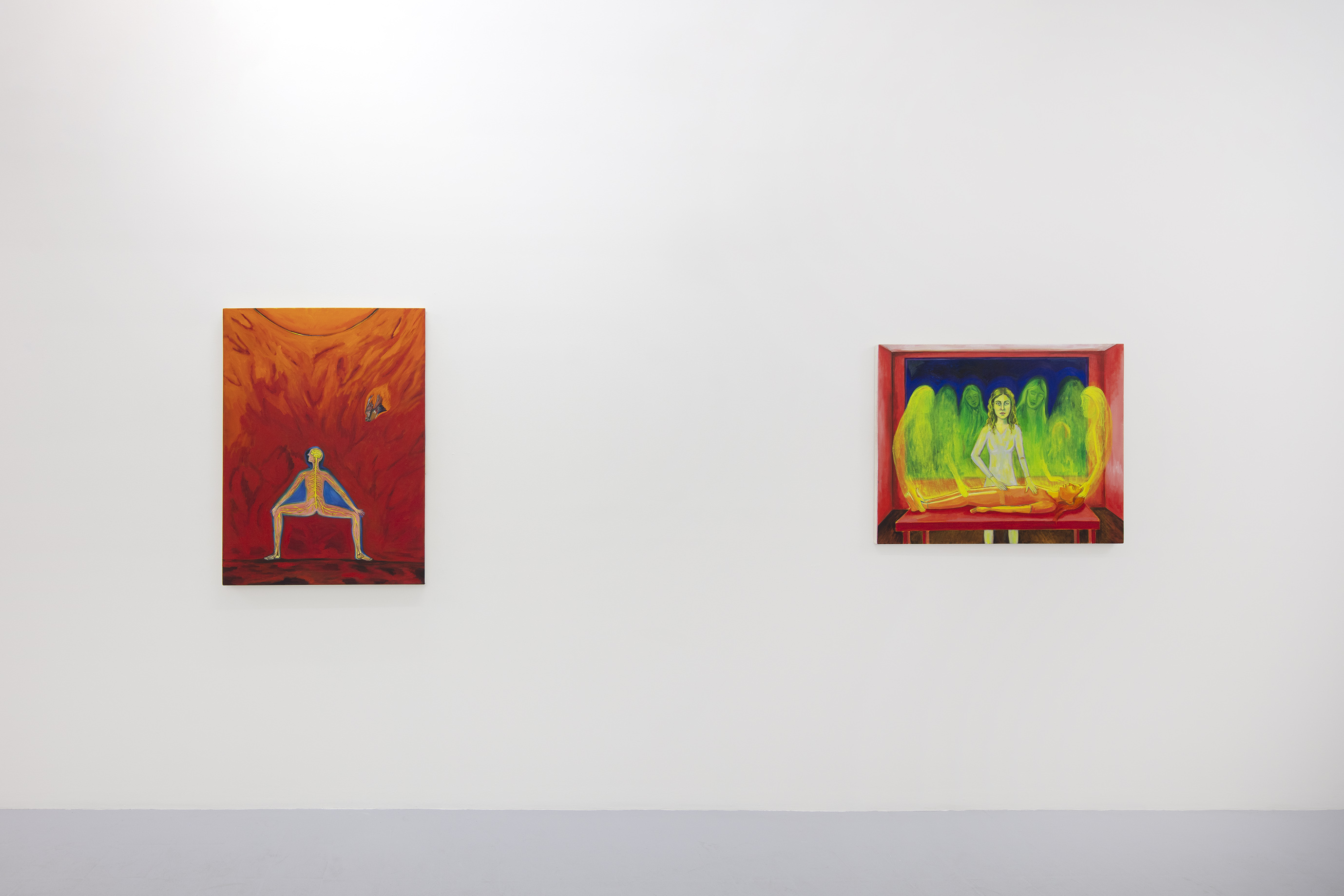
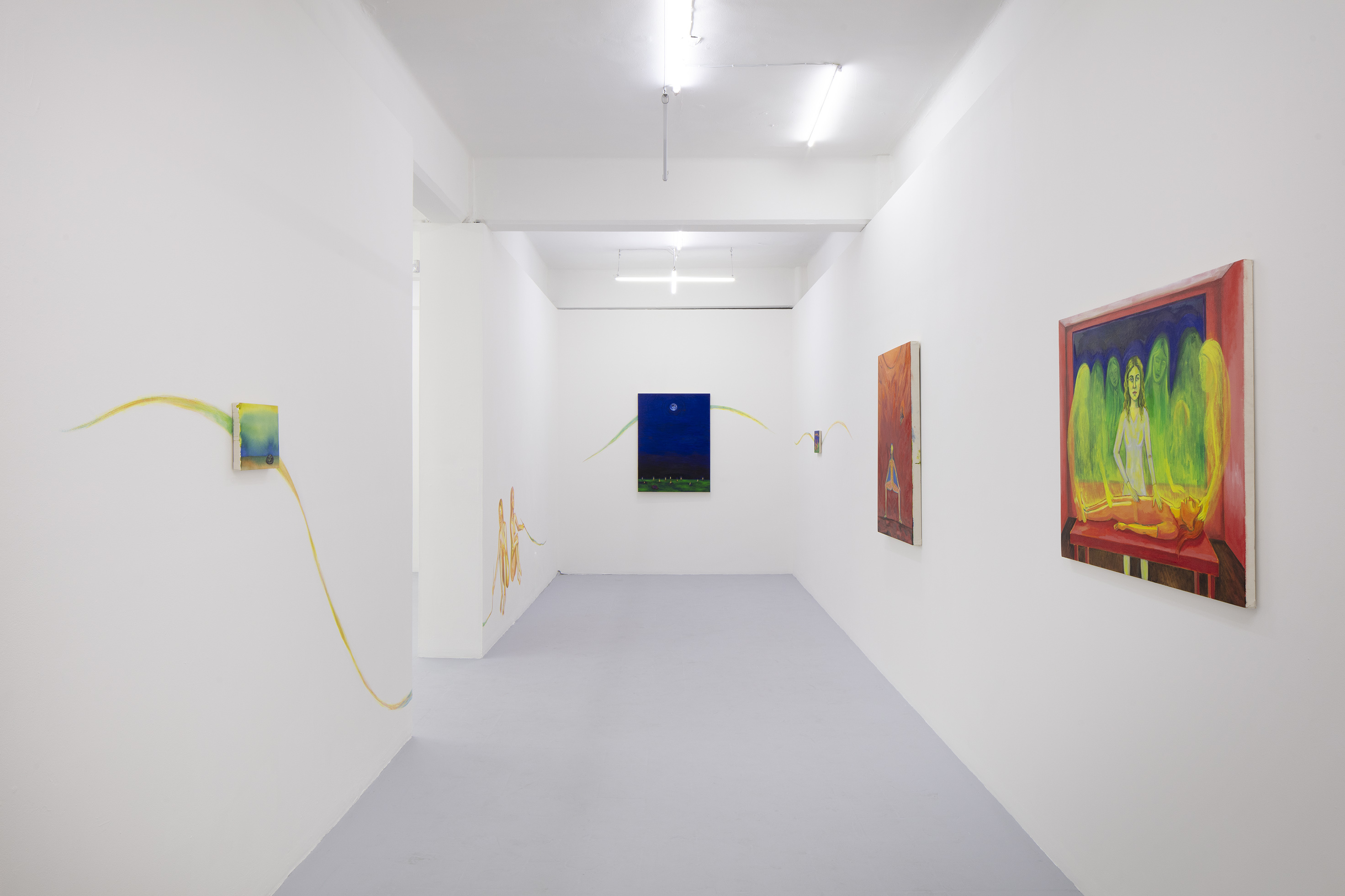
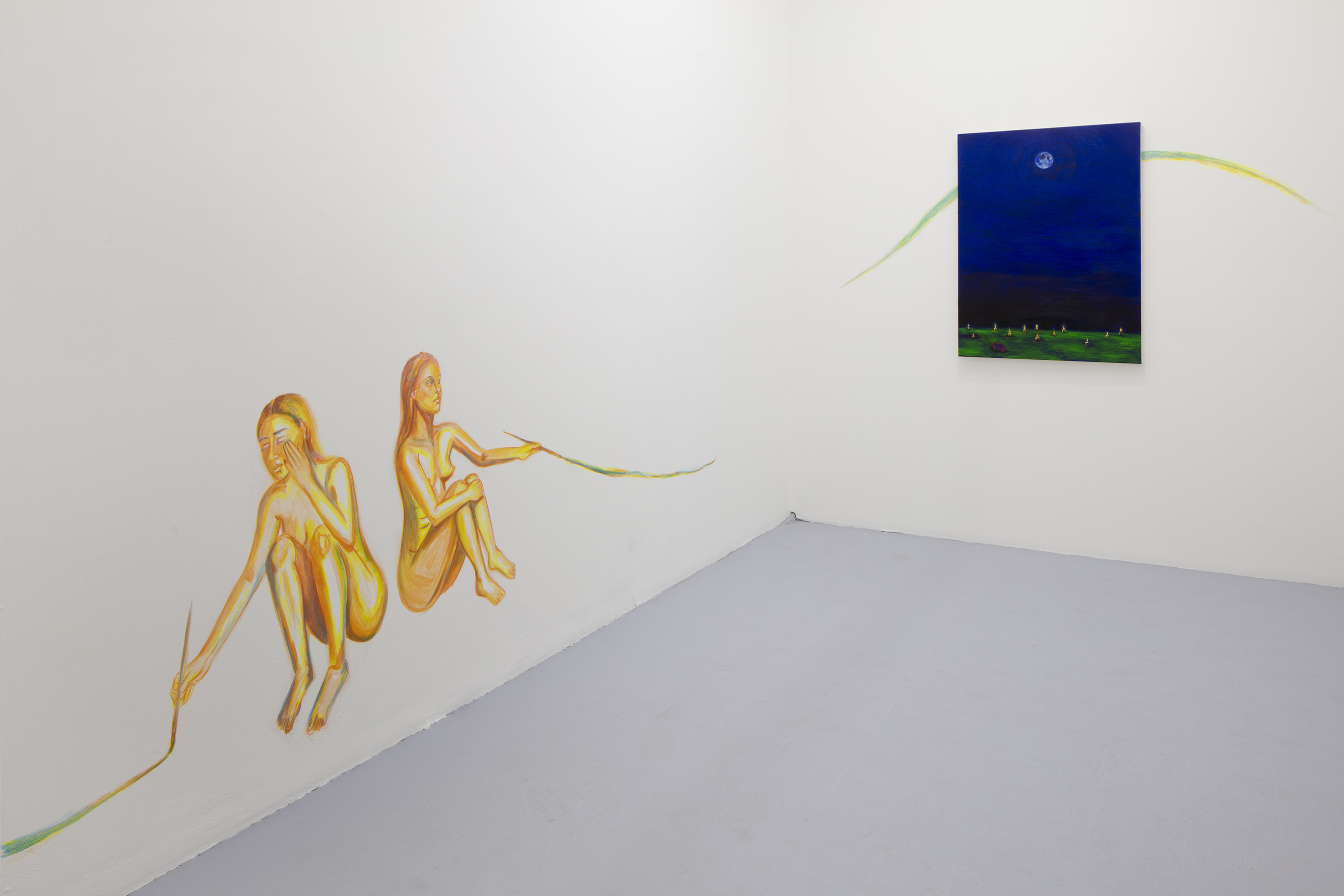
The two figures carry a red-orange energy that reappears on the opposite wall of the gallery. There, we encounter them with their backs turned to each other, each one painting, following the original instructions. They are transforming the gallery into a circle: a space between what we can see and what we can only feel.
The use of red for the bodies, green for the floor, and dense blue for the sky is reminiscent of Matisse, especially the still figures in La musique (1910). The two figures holding hands and the mantra written in the style of a retablo evoke Kahlo’s self-portrait The Two Fridas (1939).
But I am more inclined to read Granara’s paintings within the lineage of women artists whom Jennifer Higgie suggests understood painting as a form of communication with other dimensions, including Hilma af Klint, Agnes Pelton, and Emma Kunz, among others. With ¡Vé a pintar!, Granara enters this lineage, using painting not simply as the production of images but as a way of opening herself to forms of knowledge that exceed the visible.
As Higgie suggests, this spiritual dimension has historically been treated differently when it appears in the work of women. Kandinsky could explore spirituality without it fundamentally undermining his position within modern art. However, for women artists, the same interests could become evidence of eccentricity, irrationality, even madness. What was visionary in a man could become suspect in a woman.
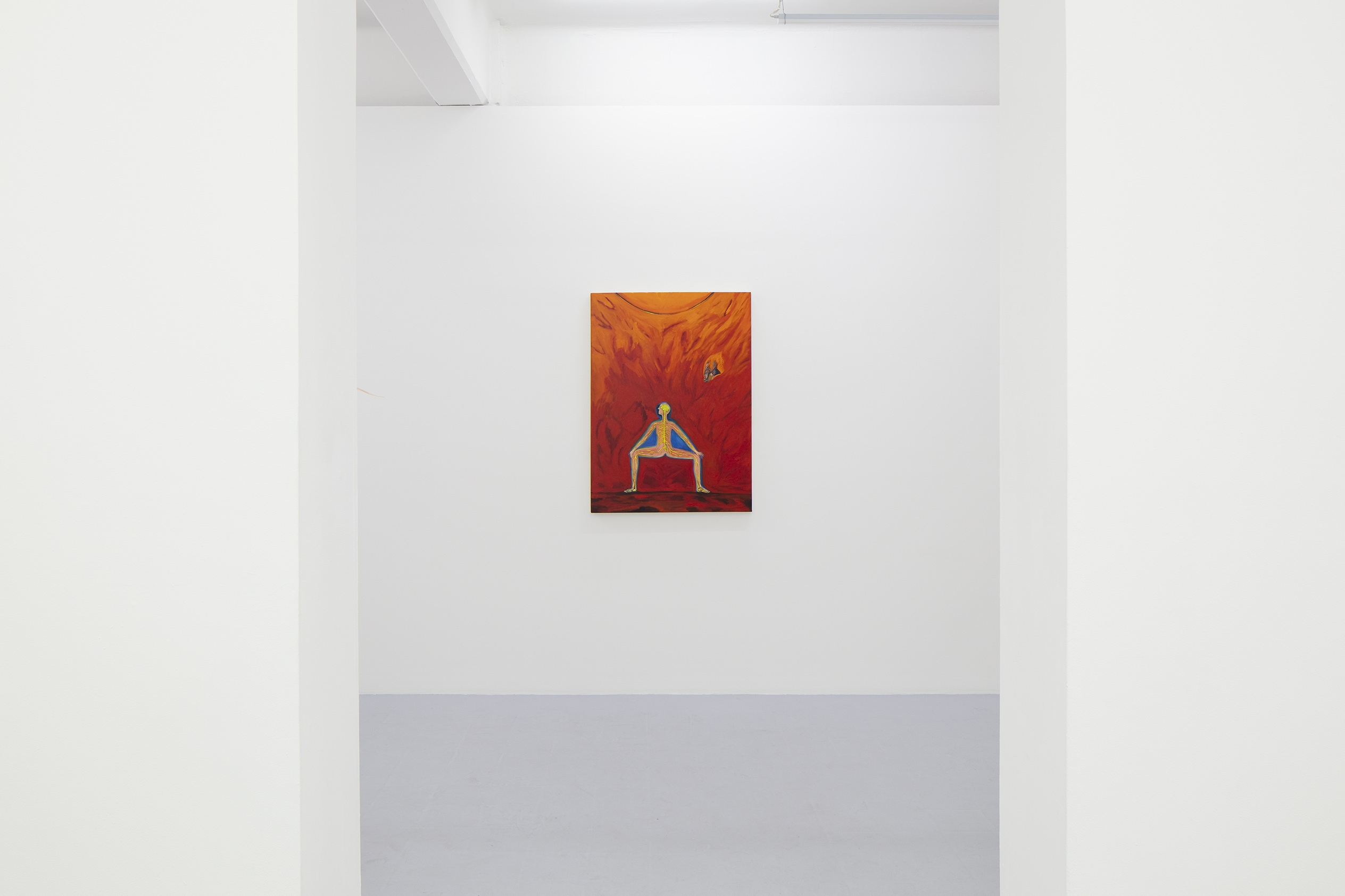
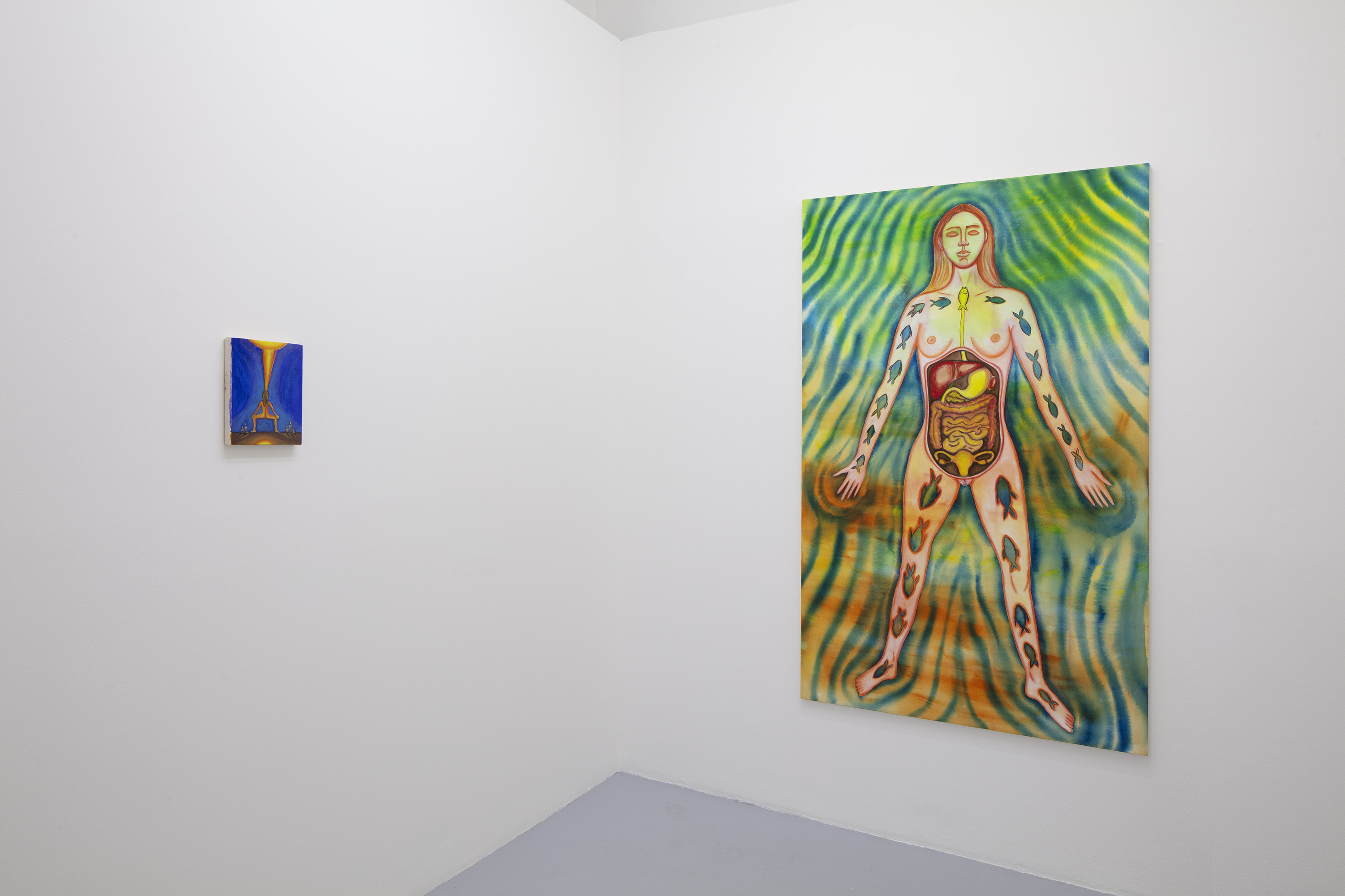
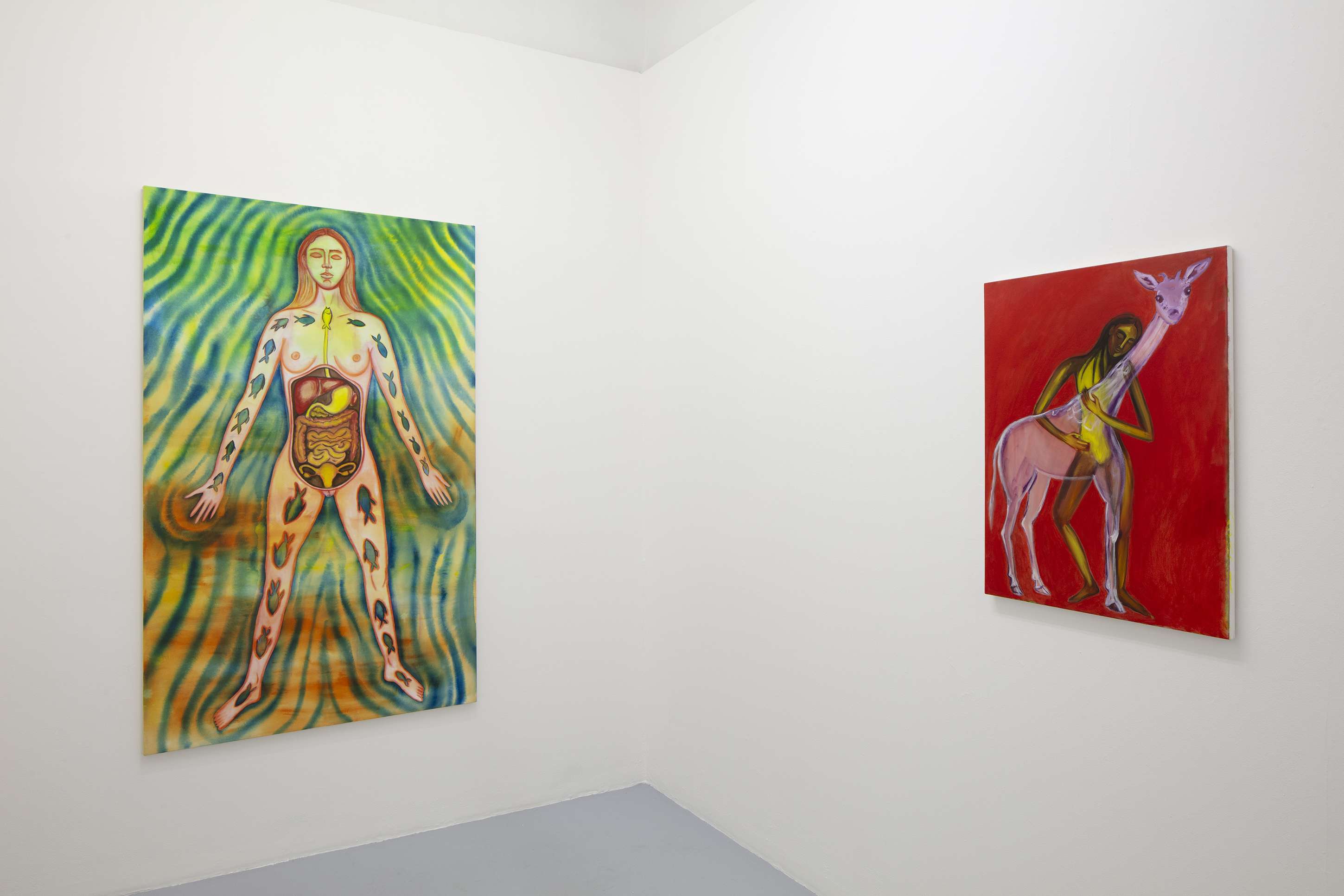
Granara does not intend to resolve this tension but bravely aligns her first solo exhibition in Mexico City with women artists who painted/connected centuries before her. Granara shows us her soul, from her digestive system in Autoretrato, to her nervous system in Arder, to her ecological encounters with animals, light, horizons, and other forms of life. Beneath all of these images, we feel a more essential connection: painting for Granara is itself an act of opening.
In Ocho fuentes de luz, energy connects from the head like fabric hanging from a curtain, inspired by Louise Bourgeois's Anatomy. In Sanar, what cannot be seen but can be felt becomes material on the surface of the painting, emerging through its layers of preparation. If we look at 2the side of the painting, we have clues about the layers that made the painting. The layers that Granara used to connect to the final version of the painting, as well as to another nervous system that rests calmly with a peaceful cat.
Granara gives us clues. How to open up? Who helped her? A bird flies rapidly toward the nervous system, almost as if coming to its aid. Later, it offers comfort in Jirafa. Turtles and lights appear and disappear, becoming similar presences from this dimension and others, from this time and other times, like in Ofrenda (una vela por cada mes del año).
And perhaps this is what Granara's paintings ultimately ask of us: not to understand everything her paintings contain, or even ask about their functionalities, but to stay with what we feel before we know how to name it. To be open to not knowing.
III - After seeing the show
What if looking at art is not primarily an act of interpretation, but an act of receptivity?
COURTESY OF RAMIRO CHAVES
COURTESY OF RAMIRO CHAVES

COURTESY OF RAMIRO CHAVES
COURTESY OF RAMIRO CHAVES
COURTESY OF RAMIRO CHAVES
COURTESY OF RAMIRO CHAVES
COURTESY OF RAMIRO CHAVES
.jpg )
COURTESY OF RAMIRO CHAVES
COURTESY OF RAMIRO CHAVES