COURTESY OF RAMIRO CHAVES

SEPTEMBER 3 - OCTOBER 24, 2026
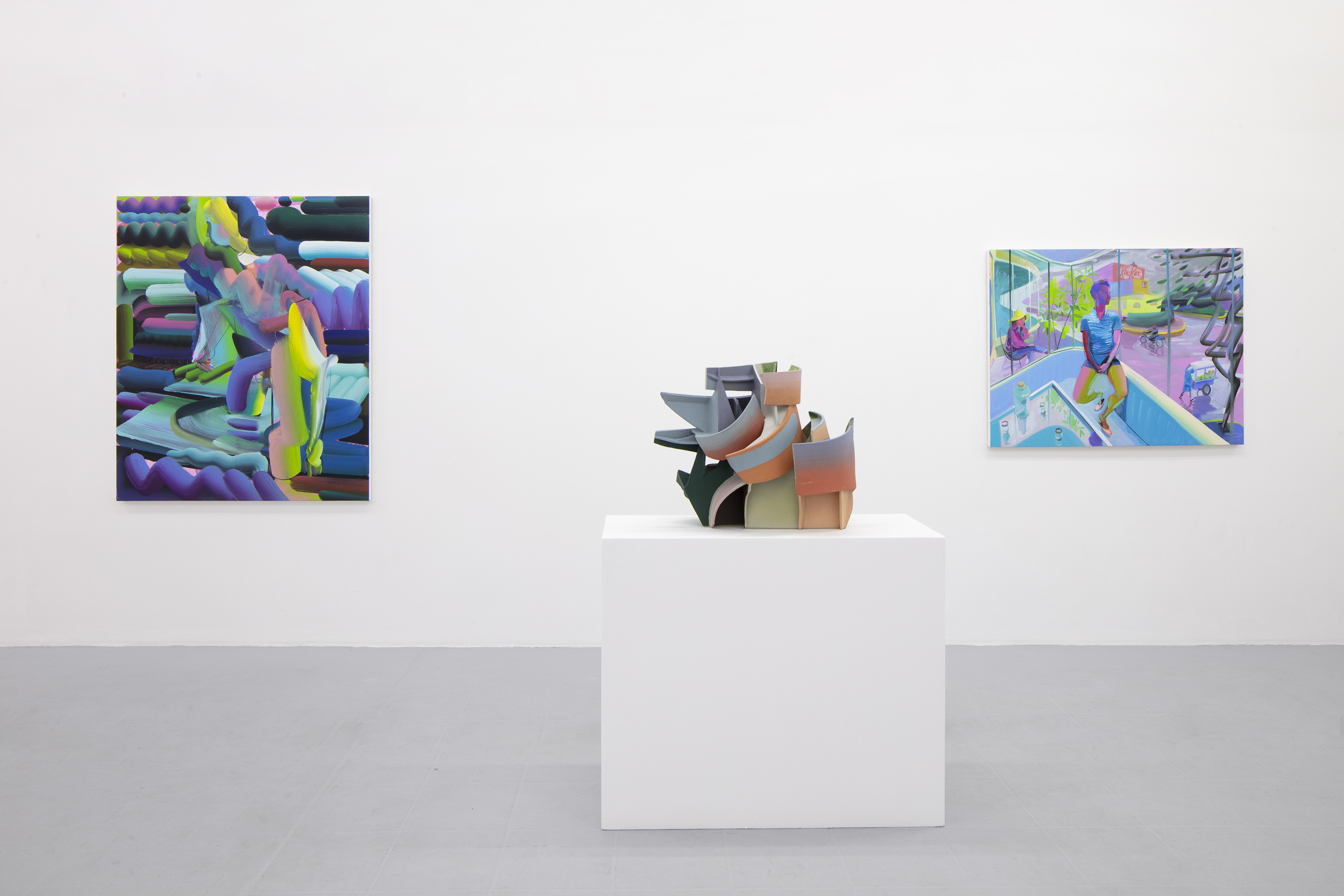
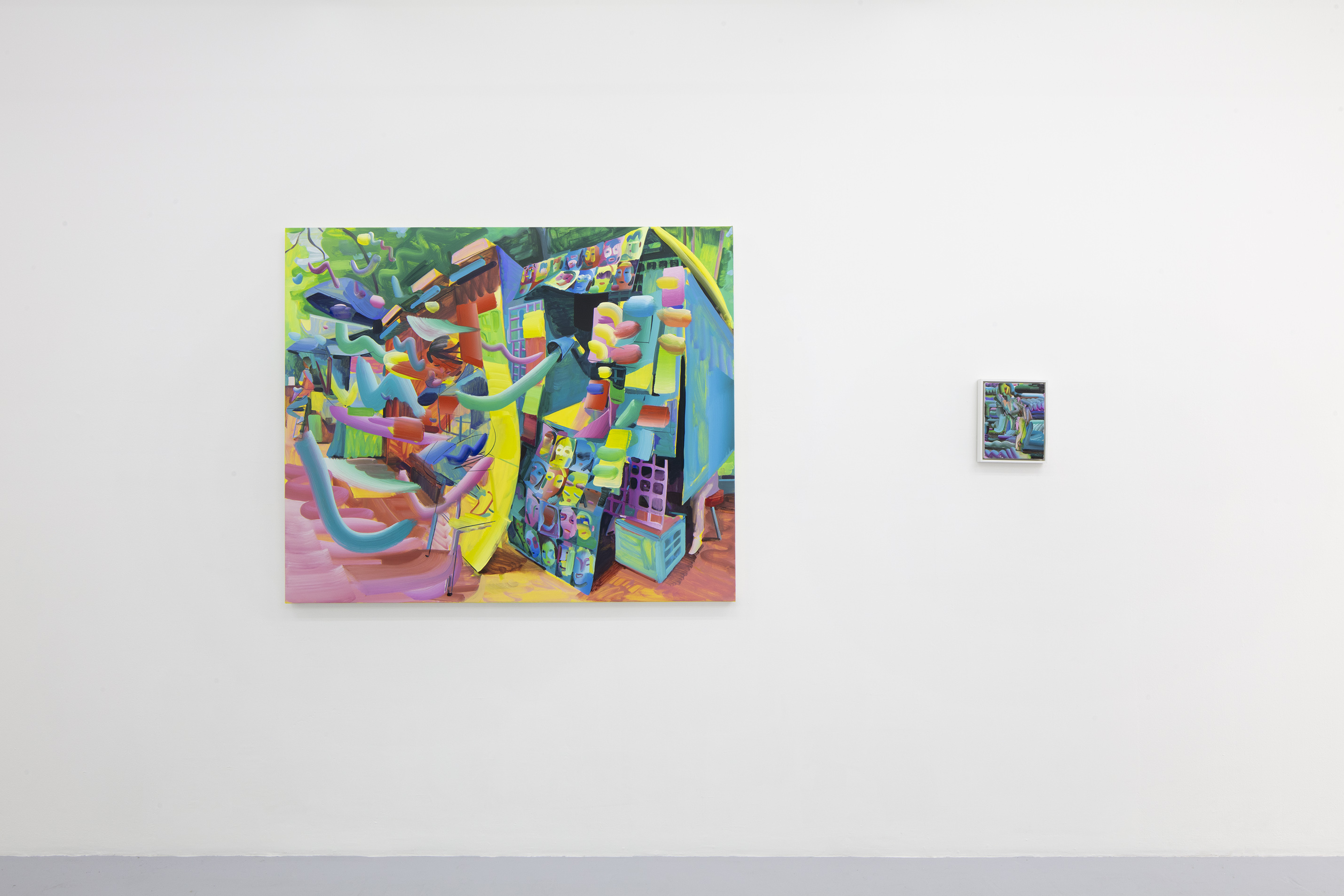
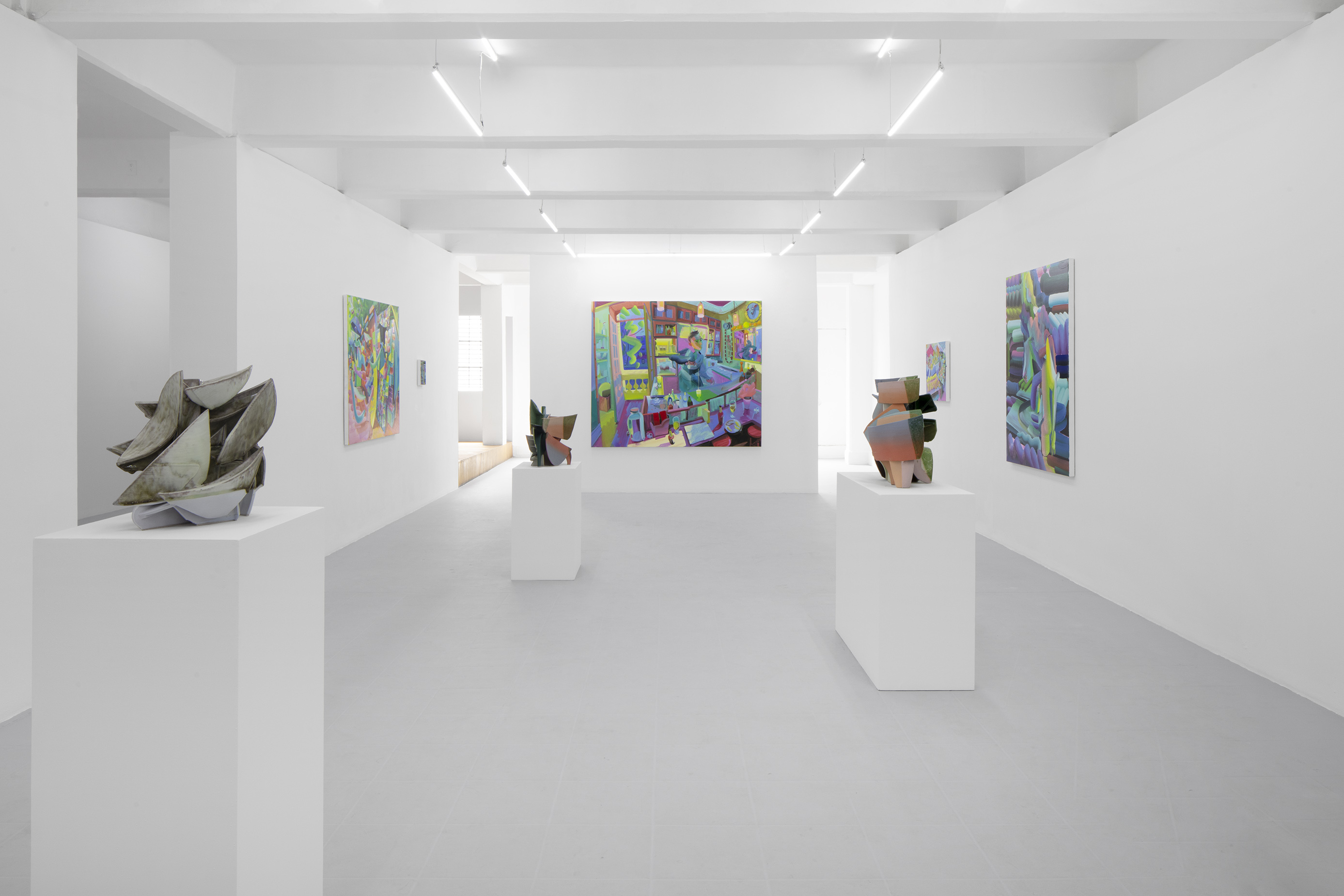
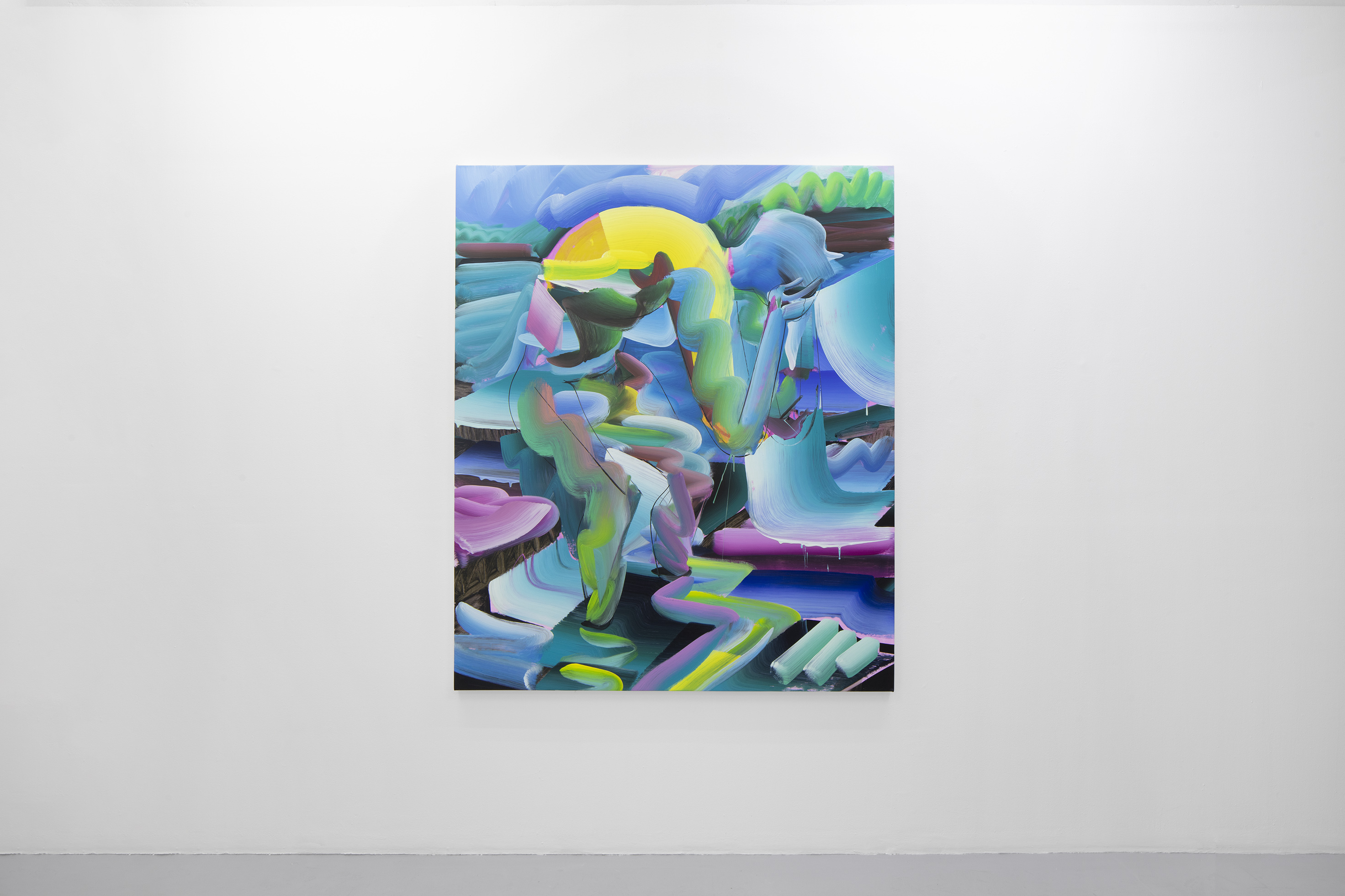
Galería Karen Huber is pleased to announce Aguacero by Andrew Holmquist, the artist's second solo effort with the gallery. Comprising new paintings and sculptures, the exhibition marks recent development in Holmquist's phenomenological exploration of fleetingness. Rooted in autobiographical episodes and frisky daydreams, the events and scenarios Holmquist portrays on canvas and in clay challenge representation's limits to facilitate deep engagement with the wonders of the everyday. In Aguacero, Holmquist turns his attention to Mexico City.
Promesas (2026), an interior bar scene and the largest of the paintings, anchors the exhibition and summarizes its intent: to capture the luminous energy and quicksilver dynamic of Mexico’s capital. In the painting, spatiality acquires a hyperbolic character, as though reality were plotted to a rollercoaster. The eye roves across countertops laden with the accouterment of a good time, then briefly lands on the central figure of a bar tender (and the phosphorescent drink he’s pouring) before lifting off again to other corners. A mirror tucked against the right edge enhances the mezcaleria’s unbound perspectives.
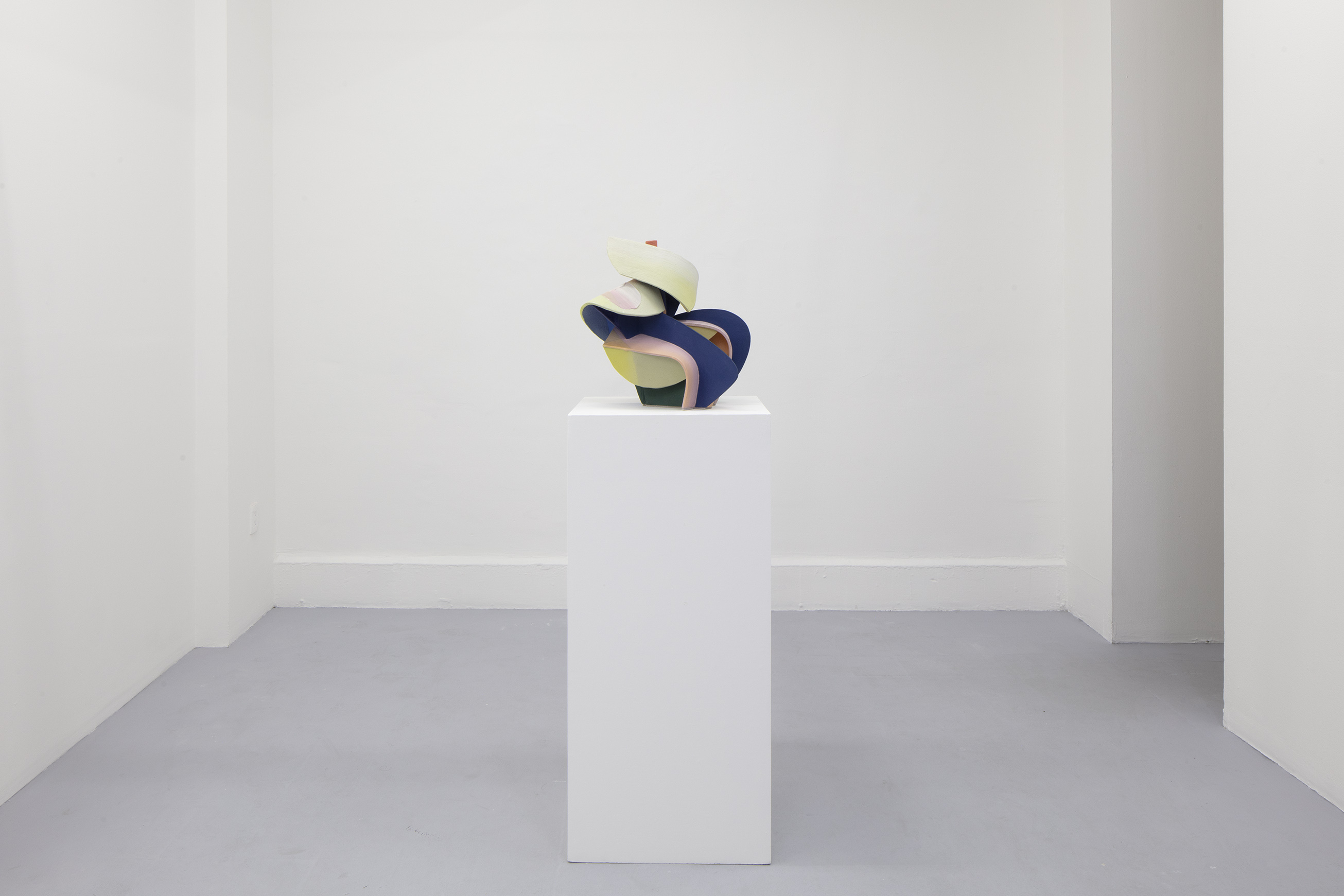
A selection of quieter “bather paintings” shift the emphasis from sudden encounters to meditations on the male figure at leisure, where the presence of water signals respite and contemplation. That the figures submit to abstraction tells us they are bodies unencumbered by the burden of being bodies. They recuperate in pure motion. Likewise, a series of new ceramic sculptures, produced at Taller El Camaleón, twist Holmquist’s fluid brushstrokes from the picture plane and into three-dimensional space. Boat-like and shimmering, they reminds us that Constantin Brancusi once said, “sculpture is nothing but water.”
Other works demonstrate the artist’s ambitions to convey a sense of élan when the unexpected ruptures routine. Two painted scenes—one showing a banana merchant and the other a face-painting stand—suggest that gravity (and with it the laws of physics) might have taken a holiday. And a view of a man against windows overlooking a crosswalk provides the most explicit clue to the significance of the exhibition’s title. The muted pinks and cool mauves suffusing the picture’s atmosphere, as well as subtle reflections on pavement and a windblown tree, give the impression of a downpour like the aguacero of Mexico City’s rainy season. Applied metaphorically, one can interpret the suddenness, captured in this painting and the others, as the aguacero of daily life— that is, a rapid shift in conditions that make one to feel enlivened. As such, Holmquist’s Aguacero is a love letter to a city of endless surprise and the surprising inspiration it affords him.
COURTESY OF RAMIRO CHAVES

COURTESY OF RAMIRO CHAVES
.jpg )
COURTESY OF RAMIRO CHAVES
COURTESY OF RAMIRO CHAVES
COURTESY OF RAMIRO CHAVES
.jpg )
COURTESY OF RAMIRO CHAVES
COURTESY OF RAMIRO CHAVES
COURTESY OF RAMIRO CHAVES
.jpg )
COURTESY OF RAMIRO CHAVES